
Prateek Agrawal Apr 25, 2026 No Comments
Understanding the data analyst salary landscape has become critical for anyone planning a career in analytics, switching domains, or hiring talent. With organizations across industries relying heavily on data-driven decision-making, demand for skilled analysts continues to grow rapidly—directly impacting compensation trends.
This guide breaks down everything you need to know about data analyst salaries in 2026, including India-specific insights, global benchmarks, experience-wise breakdowns, and strategies to maximize your earning potential.
The rise in data analyst salary is not accidental—it is driven by structural changes in how businesses operate.
Companies today depend on data for:
As a result, data analysts are no longer “support roles.” They are now core business enablers.
This shift has directly pushed salaries upward, especially for professionals who combine technical skills with business understanding.
The data analyst salary in India varies based on experience, city, industry, and skill set. However, the following ranges give a realistic benchmark:
The key takeaway: data analyst salary grows exponentially with skill depth and business impact.
Location plays a significant role in determining compensation.
However, remote work is gradually reducing location-based salary differences.
If you are targeting international roles, here’s how data analyst salary compares globally:
The gap exists primarily due to:
But with remote opportunities, Indian professionals can increasingly tap into global salary levels.
Not all industries pay the same. The data analyst salary differs significantly depending on domain.
Domain knowledge can increase your salary by 20–40% compared to generic roles.
Your salary is directly linked to your skill stack. Here’s how different skills affect earning potential:
Professionals with advanced skills often command 2x–3x higher data analyst salary than beginners.
Certain tools significantly influence salary levels:
| Tool / Skill | Salary Impact |
| Excel | Base level |
| SQL | +20% |
| Power BI / Tableau | +30% |
| Python | +40% |
| Machine Learning | +60%+ |
Employers pay more for analysts who can move beyond reporting into insight generation and prediction.
One of the most common questions is how data analyst salary evolves over time.
The growth is not linear—it depends heavily on:
Freelancing has opened new income streams.
Freelancers with niche expertise can earn more than full-time employees.
Several variables impact compensation:
If your goal is to maximize your data analyst salary, focus on these strategies:
Excel is essential, but not sufficient. Learn SQL and visualization tools.
Employers value practical experience over theoretical knowledge.
Understanding revenue, cost, and KPIs sets you apart.
Salary jumps often happen during job transitions.
AI is reshaping analytics roles, early adopters will earn more.
The future of data analyst salary is closely tied to AI and automation.
Key trends:
Entry-level roles may become more competitive, but skilled professionals will continue to command premium salaries.
Yes—but only if approached correctly.
A data analyst role can be:
However, success depends on continuous learning and skill upgrades.
The data analyst salary in 2026 reflects the growing importance of data in business decision-making. While entry-level salaries may seem modest, the growth potential is significant for those who invest in the right skills.
If you focus on:
You can quickly move into higher salary brackets and even access global opportunities.
Typically between ₹3.5 LPA to ₹6 LPA for freshers.
Bangalore offers the highest average salaries in India.
Yes, with strong skills and projects, freshers can earn ₹6–8 LPA.
Yes, due to high demand and strong salary growth potential.
If you’re planning to enter or grow in this field, now is the right time—the demand is strong, and the earning potential is only going higher.

Prateek Agrawal is the founder and director of Ivy Professional School. He is ranked among the top 20 analytics and data science academicians in India. With over 16 years of experience in consulting and analytics, Prateek has advised more than 50 leading companies worldwide and taught over 7,000 students from top universities like IIT Kharagpur, IIM Kolkata, IIT Delhi, and others.
Prateek Agrawal Apr 16, 2026 No Comments
A few years ago, becoming a data scientist meant learning Python, a few machine learning algorithms, and building some dashboards.
That playbook is broken.
In 2026, companies are no longer hiring “data scientists.”
They are hiring decision-makers who can use data and AI to move the business forward.
This is why data scientist skills 2026 look very different today.
So instead of listing generic skills, let’s answer a better question:
What skills make someone valuable in today’s data-driven organizations?
Data science is no longer a support function. It is now directly tied to revenue, efficiency, and strategy.
Three major shifts are redefining the role:
This shift is exactly why data scientist skills 2026 are becoming more business-focused than ever before.
Let’s break this down in a way that actually reflects real-world expectations of data scientist skills 2026.
Before you touch data, you need to define the problem correctly.
Most professionals jump straight into analysis. The best ones step back and ask:
If you get this wrong, even the best model won’t help. This is one of the most critical data scientist skills 2026.
Yes, statistics is important. But what defines data scientist skills 2026 is data intuition.
This means:
Python is still essential, but expectations have changed in data scientist skills 2026.
The focus is now on:
Clean datasets are a myth.
A core part of data science skills 2026 is handling:
Machine learning is still relevant, but companies don’t need academic experts.
They need professionals who reflect real-world data scientist skills 2026:
This is no longer optional.
Modern data scientist skills 2026 include working with AI systems effectively.
This includes:
In 2026, visualization is about decision clarity.
A key part of data scientist skills 2026 is asking:
What should the user do after seeing this?
Companies now expect ownership.
This shift defines data scientist skills 2026:
A major shift in data scientist skills 2026 is understanding systems, not just datasets.
You should know:
Top performers use AI to build workflows, not just ask questions.
This is what separates average vs top-tier data scientist skills 2026.
It’s not about how many tools you know.
It’s about how you combine them.
The real power of data scientist skills 2026 lies in skill stacking:
Data science is evolving rapidly.
What’s changing:
This reinforces why data scientist skills 2026 are focused on impact, not just tools.
The biggest mistake people make is preparing for yesterday’s roles.
If you build the right data scientist skills 2026, you won’t just stay relevant, you’ll become indispensable.
Because the future doesn’t belong to people who know tools.
It belongs to people who know how to use data to make decisions.
Prateek Agrawal is the founder and director of Ivy Professional School. He is ranked among the top 20 analytics and data science academicians in India. With over 16 years of experience in consulting and analytics, Prateek has advised more than 50 leading companies worldwide and taught over 7,000 students from top universities like IIT Kharagpur, IIM Kolkata, IIT Delhi, and others.
Team Apr 10, 2026 No Comments
The demand for data engineers in India has exploded, and Data Engineer Salary in India 2026 is now one of the hottest topics among job seekers and professionals looking to switch careers. As companies double down on data-driven decision-making, the role of a data engineer has become critical to business success.
But how much do data engineers actually earn in 2026? And what factors truly influence these salaries?
Let’s break it down in a practical, no-fluff way.
India’s data ecosystem is maturing rapidly. Organizations are no longer just experimenting with data, they are building entire products, platforms, and strategies around it. This shift is directly impacting Data Engineer Salary in India 2026, pushing compensation higher across industries.
Here’s what’s driving this growth:
In simple terms: companies have data, but they desperately need experts who can make it usable.
Let’s get straight to the numbers. The Data Engineer Salary in India 2026 varies significantly based on experience.
| Experience Level | Average Salary (₹ per annum) |
| 0–2 years (Fresher) | ₹5 – ₹10 LPA |
| 2–5 years | ₹10 – ₹20 LPA |
| 5–8 years | ₹20 – ₹35 LPA |
| 8–12 years | ₹35 – ₹60 LPA |
| 12+ years | ₹60 LPA – ₹1 Cr+ |
These figures reflect realistic market trends across startups, mid-sized firms, and large enterprises.
One key insight: the jump from mid-level to senior roles is where salaries accelerate sharply. This is where skills and real-world impact start to matter more than just experience.
Not all companies pay equally, even for similar roles. The variation in Data Engineer Salary in India 2026 is heavily influenced by the type of organization.
If your goal is to maximize your Data Engineer Salary in India 2026, moving toward product-based companies or high-growth startups is often the smartest move.
When analyzing Data Engineer Salary in India 2026, one thing becomes clear: tools alone don’t drive salary—your ability to solve real problems does.
That said, certain skills consistently command higher pay.
Professionals who combine 2–3 of these capabilities often see a significant jump in their Data Engineer Salary in India 2026.
Location still plays a role in determining salaries, although remote work is gradually reducing these differences.
While metro cities dominate high-paying roles, remote opportunities are allowing professionals from smaller cities to access better compensation.
To better understand Data Engineer Salary in India 2026, let’s look at practical scenarios.
A professional transitioning from a non-tech role may start at ₹6–10 LPA. With consistent upskilling, they can reach ₹15–20 LPA within 2–3 years.
With 3–5 years of experience, salaries range from ₹18–30 LPA in product companies. Adding cloud and big data skills can push this beyond ₹25 LPA.
Highly skilled engineers working on large-scale systems earn between ₹40 LPA and ₹1 Cr+. These roles demand strong system design and deep technical expertise.
Many professionals make the mistake of focusing only on tools instead of impact. If you want to grow your Data Engineer Salary in India 2026, you need to think differently.
Here’s what actually works:
The market rewards those who can deliver business outcomes, not just technical knowledge.
The short answer is yes and it’s getting even better.
However, the role is evolving rapidly, which will continue to influence Data Engineer Salary in India 2026 and beyond.
If you stay at a basic skill level, your salary growth will plateau. But if you evolve with AI, cloud, and distributed systems, you will move into the top earning bracket.
Data engineering in India in 2026 is no longer just a “good career option” it’s a strategic, high-income career path.
The gap in Data Engineer Salary in India 2026 between average and top professionals is massive. And that gap is driven by one key factor: the ability to create real business impact through data.
If you are entering this field or looking to grow, focus less on certifications and more on building systems that companies actually need.
Because in today’s market, skills get you hired but impact gets you paid.
Prateek Agrawal is the founder and director of Ivy Professional School. He is ranked among the top 20 analytics and data science academicians in India. With over 16 years of experience in consulting and analytics, Prateek has advised more than 50 leading companies worldwide and taught over 7,000 students from top universities like IIT Kharagpur, IIM Kolkata, IIT Delhi, and others.
This is a
Prateek Agrawal is the founder and director of Ivy Professional School. He is ranked among the top 20 analytics and data science academicians in India. With over 16 years of experience in consulting and analytics, Prateek has advised more than 50 leading companies worldwide and taught over 7,000 students from top universities like IIT Kharagpur, IIM Kolkata, IIT Delhi, and others.
Team Nov 07, 2022 No Comments
By automating the ETL process, organized business intelligence can be derived from the collected data. You can use these ETL tools that will help you to be successful.
The most successful brands presently are completely data-driven. Whether it is Amazon, Google, TikTok, or any other company, they all use data for determining their next moves. But here is a thing. It is convenient to collect ample data. Analyzing all that data is often the most challenging job. Let us have a look at some of the ETL tool examples that you can use in data transfer. Also, there are various ETL tools free of cost, but it is always advised to go with the ones that are mentioned below.
Companies and industries of all sizes presently have access to the ever-rising amount of data, far too broad for any human to comprehend. All this data is practically useless without a way to effectively analyze or process it, revealing data-driven insight that is hidden within the noise.
The ETL process is the most famous method of collecting data from various sources and loading it into a centralized data warehouse. Data is first taken from a source, such as a database, file, or spreadsheet, converted to meet the criteria of the data warehouse, and then fed into the data warehouse during the ETL process.
Data warehousing and analytics require ETL, but not all ETL software products are made equal. The ideal ETL tool may change based on your circumstances and use cases. Here are seven of the top ETL software solutions for 2022 along with a few more options you might want to take into account:
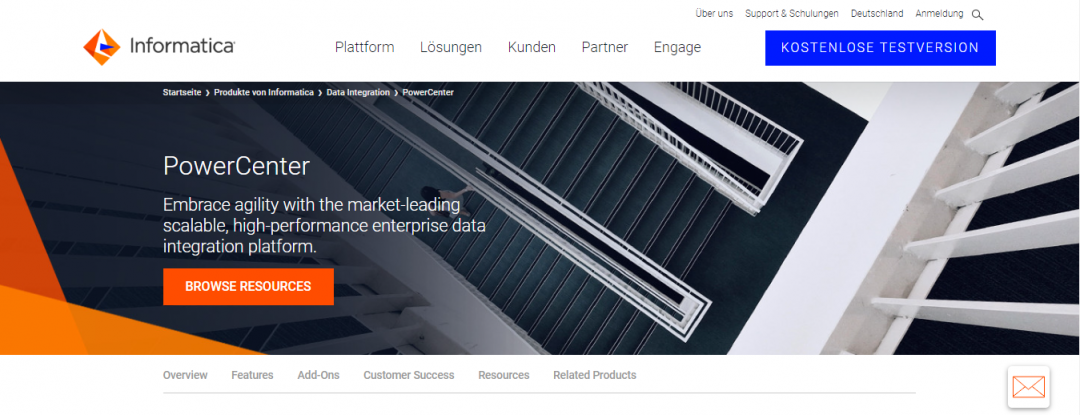
Informatica’s PowerCenter is an enterprise-grade data management system despite having an intuitive graphical user interface. It is an AI-powered platform that covers both on-premises and cloud-based ETL requirements. Additionally, it supports many clouds, hybrid, and multiple clouds, as well as unique ETL rules.
You can accomplish all of your ETL requirements with PowerCenter, including analytics, data warehouse, and data lake solutions. Extensive automation, high availability, distributed processing, interfaces to all data sources, automatic data validation testing, and dynamic partitioning are just a few of Informatica PowerCenter’s many features.
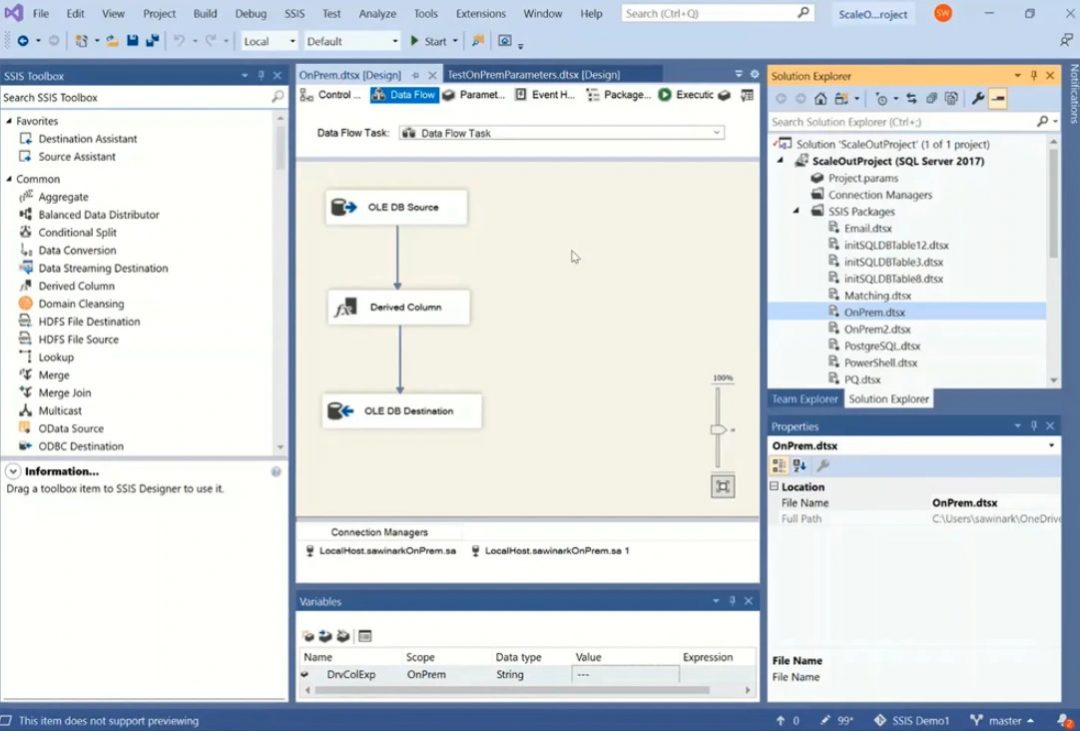
The creation of high-performance data integration, transformation, and migration solutions may be done affordably thanks to Microsoft SQL Server Integration Services (SSIS). It incorporates data warehousing extract, transform, and load (ETL) functionalities. The SSIS program can be used to clean data, put it into warehouses, copy or download files, administrate SQL Server objects or data, or mine data.
You might also want to consider SSIS when loading data, like flat files, relational databases, and XML files, from various sources.
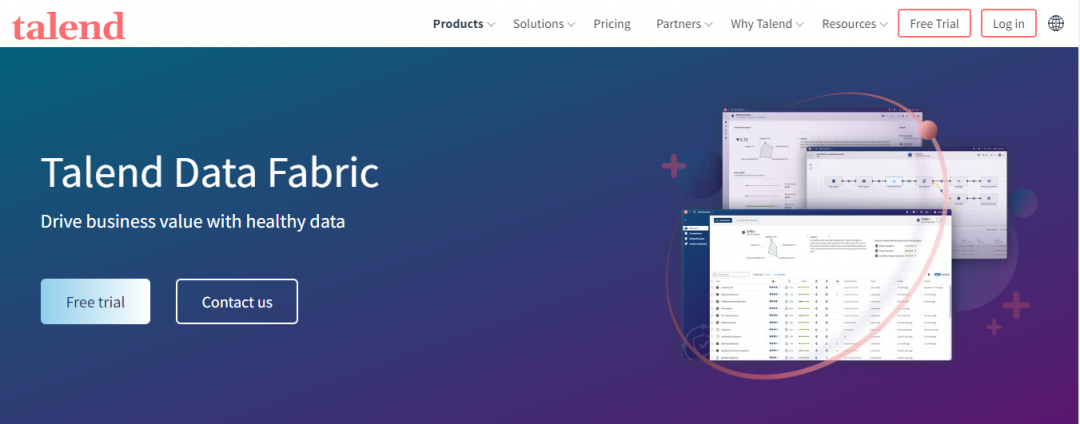
Talend provides a number of options for centrally managing and integrating data. That includes Stich Data Loader, Big Data Platform, and Talend OpenStudio. For managing on-premises and cloud data, the Talend Data Fabric offers end-to-end data integration and governance.
Environments in the cloud, hybrid cloud, and multi-cloud are supported. Additionally, it is compatible with almost every public cloud service provider and cloud data warehousing. You will also have numerous built-in integrations to work with so that it becomes convenient for you to extract and transform data from literally any source and load it to any destination you wish. You can also improve the capabilities of your Talend edition by adding tools for app integration, Big Data, and other data solutions.

Businesses wishing to gather, process, and analyze data related to online sales can use the low-code data integration platform offered by Integrate.io. It is simple to interface with NetSuite, BigCommerce, Magento, and Shopify. However, it also has features that are helpful in other fields, such as healthcare, SaaS, and e-learning.
Any source that supports RestAPI can have data extracted with Integrate.io. If there isn’t a RestAPI currently, you can create one with the Integrate.io API Generator. Once the data is transformed, you will be able to load it into several destinations like NetSuite, data warehouse, databases, or Salesforce.
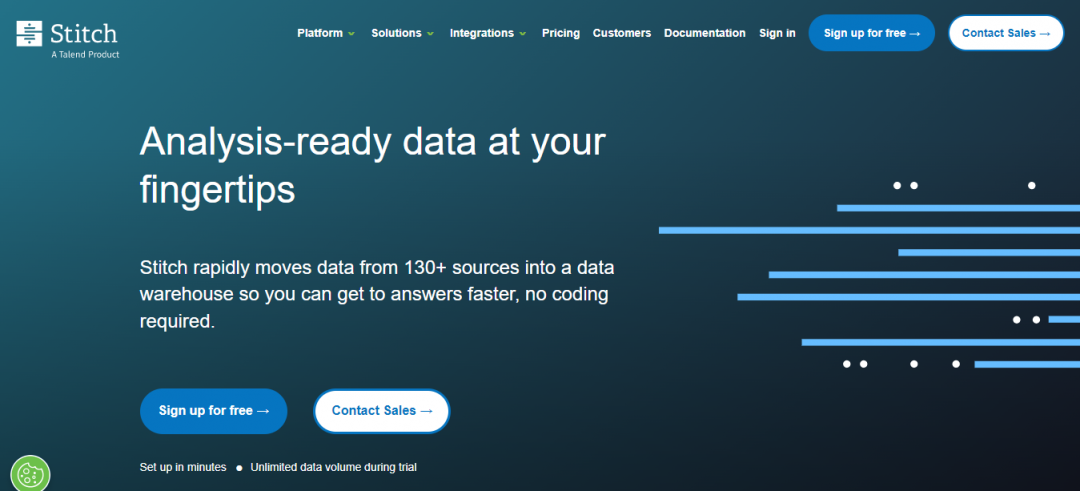
Telend’s Stitch is a completely managed, open-source ETL service that has ready-to-query schemas and also a user-friendly interface. The data integration service can source data from more than 130 platforms, services, and applications. After that, the data can be routed to more than 10 varied destinations. That includes Snowflake, Redshift, and PostgreSQL.
With a no-code technology, integrating your data in a warehouse won’t require you to write any code. You can expand its capabilities as your demands change because it is scalable and open-source. Additionally, it offers tools for internal and external data governance compliance.

The Pentaho solution makes retrieving, cleaning, and cataloging data convenient so that varied teams can use it in a consistent format. Access to IoT data is made easier by the tool for machine learning applications. Additionally, it is very scalable, allowing you to quickly and on-demand examine enormous amounts of data.
The desktop client for Spoon is also available from Pentaho Data Integration. You can use the tool to create transformations, plan jobs, and manually begin processing activities. Real-time ETL can be used with PDI as a data source for Pentaho Reporting. Additionally, it provides OLAP services and no-code operations.

The key benefit of Oracle Data Integrator is that it imports data into the destination first, then transforms it (ELT vs. ETL) utilizing the capabilities of the database or Hadoop cluster. However, ODI provides access to additional potent data management and integration features via a flow-based declarative user interface. Deep integration with Oracle GoldenGate, high-performance batch loading, and SOA-enabled data services are all examples of this.
ODI has long offered a tried-and-true platform for high-volume data operations across a range of use cases. With Oracle Enterprise Manager, monitoring is also comparatively simple.
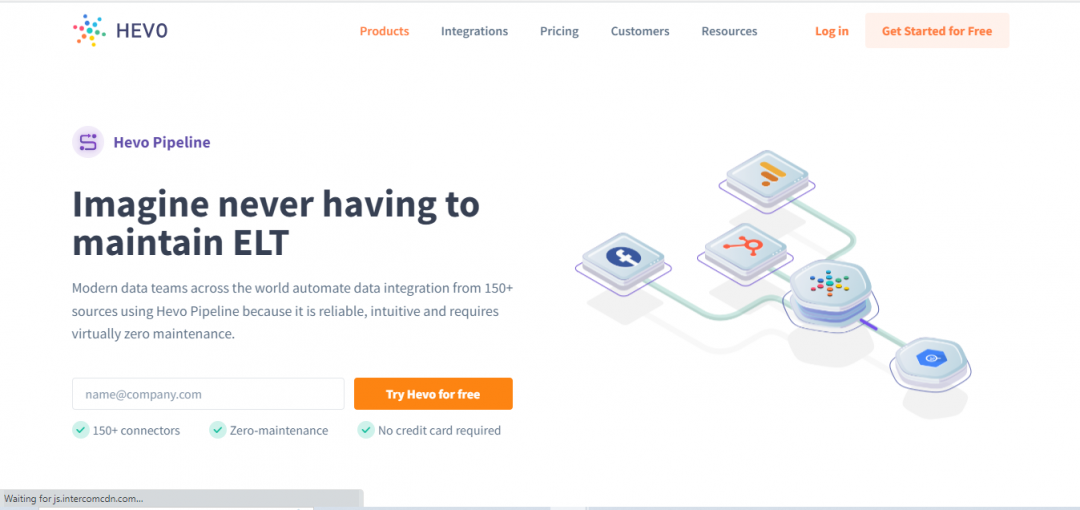
Hevo is a real-time, completely managed, no-code data solution that gathers data from over 150 sources and processes it. Additionally, it loads the normalized data into the desired destination as necessary.
You may import data into 15 different data warehouses from a variety of sources, including NoSQL databases, relational databases, S3 buckets, SaaS apps, and files.
Some of the most ideal FiveTran features involve convenient replication of data, automated schema migration, and various other connectors. Along with that, FiveTran uses refined caching layers to shift data over a safe connection without even keeping a copy on the application server.
Already-built connectors help in transforming data more quickly. These connectors are completely managed, allowing you to automate data integration without sacrificing reliability. You can anticipate complete duplication by default.
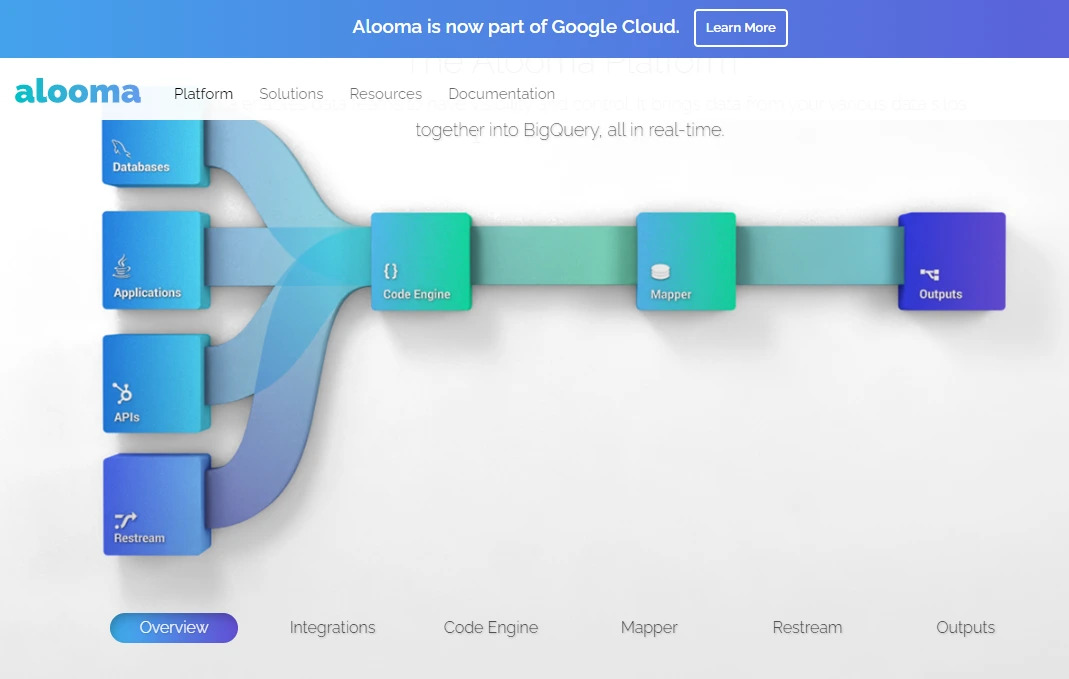
If your company depends on Google items such as Google Cloud Platform and also BigQuery databases, Aloma might be an ideal fit. The tools allow the user to unify large datasets of data from several sources into one place; BigQuery and everything in real-time.
Using ETL tools should be profitable. If you do not use them, then you will have to spend a lot on the transfer of data and associated cloud costs. So you will have to manage these charges to safeguard your margins.
Yet, without full cost visibility, enhancing costs that are related to data can be challenging. In other terms, unless you see who, why, or what changes your costs, you may have to struggle to evaluate where to cut costs without hurting your data-driven functions.
Machine Learning is the NOW! If you wish to enter this industry then there is no better time than now. All you will need is an educational experience in machine learning and AI and there is no better institute than Ivy Professional School. We are not bluffing. Ivy offers expert-led courses with relevant real-life case studies. You also get complete 1:1 career counseling absolutely free. We don’t stop here. At Ivy, get complete placement support and resume-building classes. For more details, you can visit their website.
Team Oct 11, 2022 No Comments

Guess how much data engineers earn? An average salary of ₹7,44,500 per year in India. And senior data engineers earn between ₹11 lakhs to ₹24 lakhs per year.
And if you search for data engineering jobs on Indeed or LinkedIn, you will find over 20,000 vacancies in India alone. But why am I telling you all this?
Because I want to show how in-demand data engineers are in the market. With more and more companies relying on data to make smart decisions, data engineering has become a necessity.
Now, if you want to start a career in data engineering, you have to learn some technical and soft skills. In this post, I will tell you what those essential data engineering skills are and how you can start your career in this field.
You can think of data engineers as the architects of the data world. They build and maintain systems and architecture to collect, store, and manage data.
For example, they work with ETL (extract, transform, load) processes to combine data from multiple sources into a central repository. Similarly, they build data pipelines, work with databases, and manage data warehouses.
They basically prepare the raw data for analysis so that data analysts and data scientists can do their jobs. This way, they work together to help the company find valuable insights and make decisions that lead to business growth.
To perform all those tasks, data engineers need to gain expertise in various processes, tools, and technologies. They also need soft skills to work together as a team and communicate effectively. Here are all the skills you would need to become a pro data engineer:
Aspiring data engineers often ask me, “Is coding important?” And I always tell them that coding is one of the most important skills for data engineers. It is what will help you optimize and automate data workflows as well as improve data quality and reliability. Here are some programming languages often used in data engineering:
Python: It’s good for handling big data, automating tasks, and working with different data formats. It has a range of libraries that make data processing easier and faster.
SQL: It helps manage and query large databases. It’s also needed for data handling tasks like extracting, organizing, and updating data stored in databases.
Java: This language helps you build scalable, high-performance data pipelines. It helps you develop large, reliable systems that handle big data processing efficiently.
Scala: It helps you work with distributed data systems like Apache Spark. It’s specifically designed to handle large datasets while maintaining performance.
R: It helps in data analysis and statistical tasks. You will need it to perform complex data manipulation and generate insights from data sets.
You can go through this data engineering syllabus to learn more about technical skills that are valued in the present market.
One of the most important roles of data engineers is to store and organize raw data in data warehouses. Data warehouses are simply central repositories that allow access to real-time data for analysis and decision-making.
Without this skill, you won’t be able to manage the high volume and complex data most companies handle today. So, you need to know about data warehousing solutions like Panopoly or Amazon Redshift. This way, you can make data storage, retrieval, and processing more efficient.
Knowing programming languages isn’t enough. You also need an understanding of operating systems to design, develop, and troubleshoot systems. As a data engineer, you will work with operating systems like Linux, UNIX, macOS, and Windows because data infrastructure often runs on these platforms. For example, Linux is widely used in data engineering because of its stability, flexibility, and performance.
This data engineering skill helps you design, maintain, and optimize databases. SQL is the most widely used language for managing relational databases, allowing you to query, update, and manipulate data efficiently. You also need to learn NoSQL databases like Cassandra or Bigtable, which are better suited for handling unstructured data.
You can learn basic SQL queries, cleaning and modifying data, aggregating and analyzing data, working with multiple data tables, troubleshooting and error handling, advanced filters in SQL, data definition language, data manipulation language, using subqueries, creating user-defined functions, etc.
This is an important data engineering skill because you will often have to work with big datasets that traditional databases can’t handle. It will make you an expert at managing and processing data on a large scale.
For this, you can learn Hadoop, which includes topics like MapReduce, YARN, HDFS, data spilling, data replication, Daemons, etc. You have to learn Apache Hive to query large datasets using HiveQL. You also need to know Apache Spark, how to optimize it, and how to process data in real time. A good understanding of real-time data processing with Kafka and its integration with Spark is also important.
Microsoft Azure is a cloud platform that provides scalable, secure, and cost-effective data storage and processing solutions. So, this skill helps you build and maintain data pipelines, store data, and run large-scale analytics in the cloud.
Here, you will learn about Azure services like virtual machines, storage, and database services. Next, you can understand advanced data engineering with Azure and real-time data streaming and processing. Learning hybrid cloud scenarios, governance, and compliance is also necessary.
This data engineering skill helps you better analyze and evaluate a situation. You need this to identify problems related to data collection, storage, or analysis and then develop effective solutions. You have to come up with innovative solutions to improve the performance of the systems and the quality of the data. This is where critical thinking helps you.
As a data engineer, you will collaborate with other team members and business leaders with and without any technical expertise. So, better communication skills help you explain data processes and systems and share updates without any misunderstandings. For example, you may have to work with data scientists or analysts and share findings and suggestions. And you know, this skill not only helps you in data engineering but also in your entire life.
Now, let’s understand how to become a data engineer:
Even though formal education may not be that important these days, most employers need data engineers to hold at least a bachelor’s degree. You should hold a degree in something like computer science, computer engineering, information technology, software engineering, applied math, statistics, physics, or a related area.
You just saw the important data engineering skills in the above section. You need to master them. And one of the best ways to do it is to take a comprehensive course.
For example, Ivy Professional School’s IIT-certified Data Engineering Certification course helps you learn all the in-demand skills like SQL for data engineering, Python essentials for data, Big data processing, and Azure cloud engineering.
This 45-week live online course will make you an expert at building a complete ETL data pipeline on the cloud with tools like Azure, Hive, MongoDB, Spark, Hadoop, etc. The really interesting thing about this program is that you will learn from IIT Guwahati professors and expert professionals at Amazon, Google, Microsoft, etc.
Just gaining theoretical knowledge isn’t enough. You also need to know how to implement your knowledge and solve real business problems. And you can do this by working on data engineering projects and doing internships.
Again, Ivy Professional School’s Data Engineering Certification course helps you work on 30+ real-life projects. This way, you not only gain practical experience but also build an effective portfolio that showcases your skills. Besides, you will earn a valuable certificate from E&ICT Academy, IIT Guwahati, after completing the course. This way, you can become a credible data engineer.
Related: 6 Best Data Engineering Courses
The demand for data engineer roles has increased astronomically. Organizations are actively searching for data engineers to enhance their data processes and ultimately make smart business decisions. The above data engineering skills are in demand, and those who can master these skills will have a good chance of earning high salaries. The question is, will you be one of those?
Prateek Agrawal is the founder and director of Ivy Professional School. He is ranked among the top 20 analytics and data science academicians in India. With over 16 years of experience in consulting and analytics, Prateek has advised more than 50 leading companies worldwide and taught over 7,000 students from top universities like IIT Kharagpur, IIM Kolkata, IIT Delhi, and others.
Team Sep 24, 2022 No Comments
Before a model is created, before the existing data is cleaned and made ready for exploration, even before the responsibilities of a data scientist start – this is where data engineers come into the frame. In this article, we are going to have a look at what is data engineering.
Every data-driven business requires a framework in place for the flow of data science, otherwise, it is a setup for failure. Most people enter the data science niche with the focus of becoming a data scientist, without ever knowing what is data engineering and analytics are and what the role of a data engineer is. They are crucial parts of any data science venture and their demand in the sector is evolving exponentially in the present data-rich scenario.
There is presently no coherent or official path available for data engineers. Most people in this role reach there by learning on the job, rather than abiding by a detailed avenue.
A data engineer is responsible for constructing and maintaining the data frame of a data science project. These engineers have to make sure that there is an uninterrupted flow of data between applications and servers. Some of the responsibilities of a data engineer involve enhancing data foundational procedures, including the latest data management technologies and also software into the prevailing mechanism, and constructing data collection pipelines among various other things.
One of the most crucial skills in data engineering is the potential to design and construct data warehouses. This is where all the raw data is collected, kept, and retrieved. Without data warehouses, all the activities that a data scientist does will become either too pricey or too big to scale.
Extract, Transform, and Load (ETL) are the steps that are followed by a data engineer to construct the data pipelines. ETL is crucially a blueprint for how the assembled data is processed and changed into data ready for the purpose of analysis.
Data engineers usually have an engineering background. Unlike data scientists, there is not much scientific or academic evaluation needed for this role. Engineers or developers who are interested in constructing large-scale frameworks and architecture are ideal for this role.
It is crucial to know the difference between these 2 roles. Broadly speaking, a data scientist formulates models using a combination of statistics, machine learning, mathematics, and domain-based knowledge. He or she has to code and construct these structures using similar tools or languages and also structures that the team supports.
A data engineer on the contrary has to maintain and build data frameworks and architectures for the purpose of data ingestion, processing, and deploying of large-scale data-heavy applications. Construct a pipeline for data storage and collection, funnel the data to the data scientist, to put the structure into production – these are just some of the activities a data engineer has to do.

Now that you know what is data engineering, let us have a look at the roles of a data engineer.

Here are some of the skills that every data engineer should be well versed in.
After this guide on what is data engineering, you must have known that becoming a data engineer is not an easy job. It needs a deep evaluation of tools, technologies, and a solid work ethic to become one. This data engineering job role is presently in huge demand in the industry because of the recent data boom and will prevail to be a rewarding career choice for anyone who is willing to adopt it.
UsernamE Jul 30, 2021 No Comments
SQL (often pronounced as ‘sequel’) is the acronym for Structured Query Language. To pioneer in the field of data analytics, data science or data engineering, SQL becomes one of the most vital building blocks. When people start getting into data science, the biggest problem that they face is coding.
W
Ivy Oct 07, 2020 No Comments

“I had the idea of learning about data science, and that’s what brought me to Ivy”.