ETL pipeline

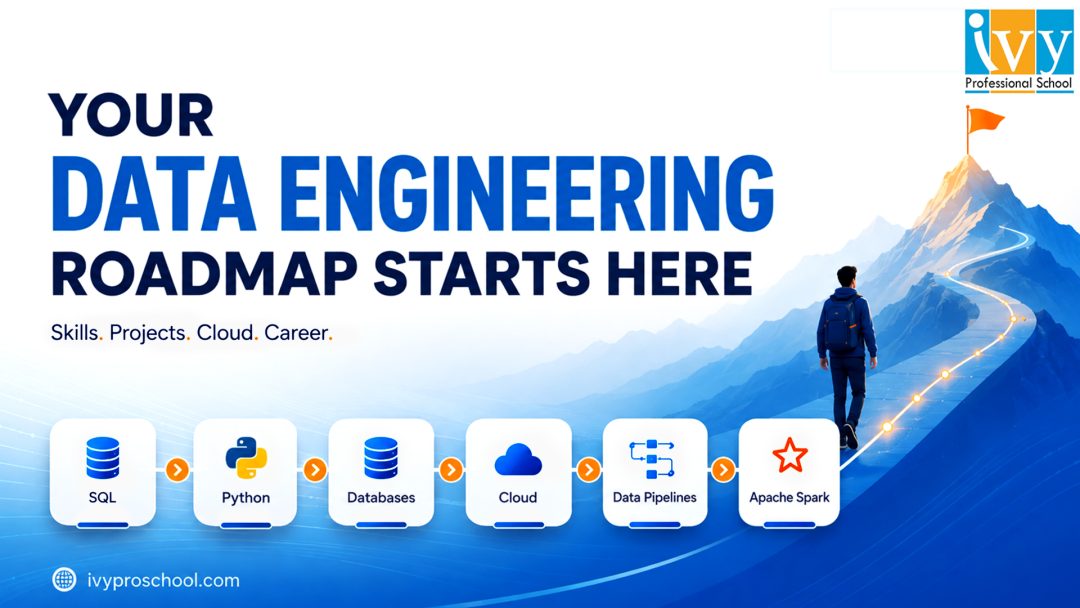
Data Engineering Roadmap 2026: The Complete Step-by-Step Guide for Beginners

Table of Contents
    Add a header to begin generating the table of contents
    Data is often called the new oil, but oil is useless without a refinery. That’s exactly the role data engineers play in the modern data ecosystem — they build the pipelines, warehouses, and systems that turn raw, messy data into something analysts, scientists, and business leaders can actually use. If you’ve been searching for a reliable data engineering roadmap, you’ve probably noticed that the internet is flooded with scattered advice, half-finished YouTube playlists, and outdated blog posts. This guide fixes that. We’ve put together a complete, practical data engineering roadmap that takes you from absolute beginner to job-ready professional, step by step. Whether you’re a fresh graduate, a working professional planning a switch, or someone who’s simply curious about this fast-growing field, this data engineering roadmap will give you clarity on what to learn, in what order, and why it matters.

    Why You Need a Data Engineering Roadmap in 2026

    Before diving into the roadmap itself, let’s address the obvious question — why does data engineering deserve your attention right now? Every company generating data — and that’s virtually every company today — needs people who can collect, clean, store, and structure that data reliably. As businesses adopt AI and machine learning at scale, the demand for professionals who can build robust data pipelines has exploded. Data engineers are no longer back-office technicians; they’re the backbone of every data-driven decision an organization makes. Without a clear data engineering roadmap, though, most beginners waste months jumping between random tutorials, unsure whether they should learn Python first or SQL first, whether cloud platforms matter at this stage, or whether they even need to touch Big Data tools like Spark and Hadoop. A structured data engineering roadmap removes that guesswork entirely.

    Step 1: Build Strong Programming Foundations

    Every good data engineering roadmap begins with programming fundamentals, and Python is the natural starting point. Python’s readability and its rich ecosystem of libraries make it the most widely used language in data engineering pipelines today. At this stage of your data engineering roadmap, focus on:
    • Core Python syntax, data structures (lists, dictionaries, sets, tuples)
    • Object-oriented programming basics
    • File handling and working with APIs
    • Writing clean, modular, reusable code
    • Basic error handling and logging
    Some data engineering roles also expect familiarity with Java or Scala, especially in organizations using Hadoop-based ecosystems. However, for most beginners following a data engineering roadmap in 2026, Python remains the most practical and in-demand choice.

    Step 2: Master SQL and Relational Databases

    If programming is the backbone of a data engineering roadmap, SQL is its heartbeat. Nearly every data engineering task — from querying a database to building a data warehouse schema — depends on strong SQL skills. Key areas to cover:
    • Writing complex queries with joins, subqueries, and window functions
    • Understanding normalization and database design principles
    • Indexing and query optimization
    • Working with relational databases like MySQL, PostgreSQL, and SQL Server
    • Stored procedures and triggers
    Recruiters consistently rank SQL as one of the top skills they screen for, which is why any serious data engineering roadmap treats it as non-negotiable, not optional.

    Step 3: Understand Data Structures, Algorithms, and Linux Basics

    Many beginners skip this step, but a well-rounded data engineering roadmap always includes at least a working knowledge of data structures, algorithms, and the Linux command line. You don’t need to become a competitive programmer, but you should be comfortable with:
    • Big-O notation and algorithmic efficiency
    • Common data structures like stacks, queues, and hash maps
    • Basic shell scripting (bash)
    • File system navigation, permissions, and cron jobs
    • Version control using Git and GitHub
    These fundamentals matter because most data pipelines eventually run on Linux-based servers, and engineers are expected to debug, automate, and schedule jobs directly from the terminal.  

    Step 4: Learn Data Warehousing Concepts

    Once your fundamentals are solid, the next stage of your data engineering roadmap is understanding how data warehouses work. A data warehouse is where structured data from multiple sources gets consolidated for analysis and reporting. Focus on:
    • OLTP vs OLAP systems
    • Star schema and snowflake schema design
    • Fact and dimension tables
    • Slowly changing dimensions (SCD)
    • Popular warehouse platforms like Snowflake, Google BigQuery, and Amazon Redshift
    Understanding warehousing concepts is a pivotal checkpoint in any data engineering roadmap, because it bridges the gap between raw data collection and meaningful business intelligence.

    Step 5: Get Hands-On with ETL/ELT Pipelines

    This is where the real “engineering” in data engineering begins. ETL (Extract, Transform, Load) and ELT (Extract, Load, Transform) pipelines are the core deliverables of the job, and no data engineering roadmap is complete without dedicated pipeline-building practice. At this stage, learn to:
    • Extract data from APIs, databases, and flat files
    • Clean, transform, and validate data using Python or SQL
    • Load data into warehouses or lakes efficiently
    • Handle incremental loads and change data capture (CDC)
    • Build and monitor pipeline reliability
    Popular tools to explore include Apache Airflow for orchestration, dbt for transformation, and Python-based frameworks for custom pipeline logic. Practicing with real datasets — not just toy examples — is what separates a theoretical understanding from job-ready skills on your data engineering roadmap.

    Step 6: Learn Big Data Technologies

    As data volumes grow, traditional tools start to struggle, and that’s where Big Data technologies come in. This stage of the data engineering roadmap introduces you to distributed computing systems built to handle massive datasets. Key technologies to explore:
    • Apache Hadoop and its ecosystem (HDFS, MapReduce)
    • Apache Spark for distributed data processing
    • Apache Kafka for real-time data streaming
    • Hive for querying large datasets using SQL-like syntax
    Not every data engineering job requires deep Big Data expertise on day one, but having this on your data engineering roadmap significantly widens the range of roles you can apply for, especially in larger, data-heavy organizations.

    Step 7: Get Comfortable with Cloud Platforms

    Modern data infrastructure lives on the cloud, which makes cloud proficiency a mandatory stop on any current data engineering roadmap. Employers today expect familiarity with at least one major cloud provider. Focus your learning on:
    • AWS services: S3, Glue, Redshift, Lambda, EMR
    • Google Cloud Platform: BigQuery, Dataflow, Cloud Storage
    • Microsoft Azure: Data Factory, Synapse Analytics, Data Lake Storage
    • Infrastructure as Code basics using Terraform
    • Containerization with Docker
    You don’t need to master all three cloud providers. Pick one, go deep, and expand later. This targeted approach keeps your data engineering roadmap efficient rather than overwhelming.

    Step 8: Understand Data Modeling and Pipeline Orchestration

    By this stage of your data engineering roadmap, you should shift focus toward designing systems that scale. This includes:
    • Advanced data modeling techniques for analytics and machine learning use cases
    • Workflow orchestration using Apache Airflow, Prefect, or Dagster
    • Building DAGs (Directed Acyclic Graphs) for pipeline scheduling
    • Monitoring, logging, and alerting for pipeline failures
    • Data quality frameworks and validation checks
    This step transforms you from someone who can write a pipeline into someone who can architect a reliable, production-grade data system — a critical distinction employers look for.

    Step 9: Learn Data Governance, Security, and Best Practices

    An often-overlooked part of any data engineering roadmap is governance and security. As data privacy regulations tighten globally, companies need engineers who understand compliance, not just code. Cover topics like:
    • Data privacy regulations (GDPR, data localization norms)
    • Role-based access control
    • Data encryption in transit and at rest
    • Metadata management and data cataloging
    • Building auditable, traceable pipelines
    Even a basic understanding here sets you apart from candidates who only focus on the technical build and ignore the responsibility that comes with handling sensitive data.

    Step 10: Build Real Projects and a Strong Portfolio

    Theory alone won’t get you hired. The final and most important stage of any practical data engineering roadmap is building real, end-to-end projects that demonstrate your skills. Project ideas to consider:
    • Build a real-time data pipeline using Kafka and Spark Streaming
    • Create an end-to-end ETL pipeline from a public API to a cloud data warehouse
    • Design a data warehouse schema for an e-commerce or fintech use case
    • Automate pipeline orchestration using Airflow with proper monitoring
    • Contribute to open-source data engineering projects on GitHub
    Document these projects clearly on GitHub and LinkedIn. Recruiters and hiring managers consistently favor candidates who can show, not just tell, that they’ve followed a genuine hands-on data engineering roadmap.

    How Long Does It Take to Follow a Data Engineering Roadmap?

    For a complete beginner, following this data engineering roadmap consistently — dedicating 15 to 20 hours a week — typically takes anywhere between 6 to 12 months to become job-ready. Working professionals transitioning from adjacent fields like software development, data analysis, or database administration may move faster, often in 3 to 6 months, since they already have overlapping skills. The key is consistency. Following a data engineering roadmap in bits and pieces, without structured guidance or accountability, is the most common reason learners give up midway.

    Common Mistakes to Avoid While Following a Data Engineering Roadmap

    1. Skipping SQL fundamentals to jump straight into flashy tools like Spark or Kafka
    2. Learning tools without understanding concepts — knowing Airflow syntax without understanding orchestration logic
    3. Ignoring cloud platforms until the job search stage
    4. Not building real projects, relying only on certificates
    5. Trying to learn everything at once instead of following a structured, sequential data engineering roadmap
    Avoiding these mistakes alone can save you months of wasted effort.  

    Why a Structured Course Beats a Self-Made Data Engineering Roadmap

    Piecing together a data engineering roadmap from free YouTube videos and scattered blog posts is possible, but it’s slow, inconsistent, and easy to abandon. A structured course gives you sequencing, mentorship, real project work, and — most importantly — a support system to keep you accountable. This is exactly where Ivy Professional School comes in. With a strong presence in Kolkata, Bangalore, and Delhi, Ivy Pro School has helped build career-ready professionals through its Data Science, Data Analytics, Data Engineering, and Generative AI programs, backed by a Pay After Placement model, and access to PrepAI, an AI-powered interview preparation tool. With a growing community of 37,500+ alumni and 500+ hiring partners, Ivy Pro School has built one of the most outcome-focused learning ecosystems for aspiring data professionals in India.

    Explore Ivy Pro School’s Generative AI Course

    If your data engineering roadmap goal is to future-proof your career by combining core data engineering skills with cutting-edge Generative AI capabilities, Ivy Pro School’s Generative AI Course is designed exactly for that. You’ll learn to build practical, production-ready GenAI applications while strengthening the data fundamentals that power them — all backed by a Pay After Placement model that keeps your investment risk-free until you land a job.

    Explore the AI for Entrepreneurs Course

    Not everyone following a data engineering roadmap wants a traditional job — some want to build their own ventures. For founders and business owners who want to understand data and AI well enough to make smarter decisions without coding everything themselves, Ivy Pro School’s AI for Entrepreneurs Course, led by industry expert Prateek Agrawal, is built specifically for that audience. It demystifies data and AI concepts in a business-first context, helping entrepreneurs apply these tools directly to growth, operations, and decision-making. Both programs are backed by Ivy Pro School’s PrepAI tool for interview and application readiness, along with a network of 500+ hiring partners actively looking for trained talent.

    Final Thoughts on Your Data Engineering Roadmap

    Data engineering isn’t a field you can master overnight, but with a clear, structured data engineering roadmap, it’s absolutely achievable — even if you’re starting from scratch. Focus on fundamentals first, build real projects consistently, and don’t be afraid to invest in structured mentorship if self-learning starts to feel directionless. The demand for skilled data engineers isn’t slowing down anytime soon, and following this data engineering roadmap puts you firmly on the path to becoming one of them.

    Frequently Asked Questions (FAQs)

    1. What is the best data engineering roadmap for beginners in 2026? The best data engineering roadmap for beginners starts with Python and SQL, moves into data warehousing and ETL pipeline concepts, then progresses to Big Data tools, cloud platforms, and orchestration frameworks like Airflow, finishing with real, portfolio-worthy projects.
    2. Do I need a computer science degree to follow a data engineering roadmap? No. While a technical background helps, a well-structured data engineering roadmap combined with consistent practice and real projects can help non-CS graduates transition into data engineering roles successfully.
    3. How much coding is required in a typical data engineering roadmap? A significant amount. Python and SQL form the core of any data engineering roadmap, and you’ll also use scripting for automation, orchestration, and pipeline development throughout your career.
    4. Which cloud platform should I learn first in my data engineering roadmap? AWS is the most widely adopted in the industry, making it a strong first choice, though Google Cloud Platform and Microsoft Azure are equally valid depending on the job market you’re targeting.
    5. Is data engineering a good career choice compared to data science? Yes. Data engineering roles are in high demand because every data science and analytics function depends on well-built pipelines and infrastructure. Following a solid data engineering roadmap can lead to stable, high-paying career opportunities, often with less competition than data science roles.
    6. How can Ivy Pro School help me follow a structured data engineering roadmap? Ivy Pro School offers structured programs with a Pay After Placement model, and the PrepAI tool for interview preparation, giving learners a guided, outcome-focused alternative to piecing together a data engineering roadmap on their own.

    ETL Pipeline: A Complete Guide to Building Reliable Data Workflows

    ETL Pipeline
    Table of Contents
      Add a header to begin generating the table of contents

      Modern organisations generate data from websites, mobile applications, business software, sensors, customer interactions, financial systems, and cloud platforms. However, collecting data is only the beginning. Before organisations can analyse this information, generate reports, build machine learning models, or make informed decisions, the data must be extracted, cleaned, organised, and moved to a suitable destination.

      This process is commonly managed through an ETL pipeline.

      An ETL pipeline provides a structured method for moving data from multiple source systems into a centralised data warehouse, database, data lake, or analytics platform. It ensures that raw information is converted into accurate, consistent, and usable data.

      In this comprehensive guide, we will explain what an ETL pipeline is, how it works, its key components, benefits, challenges, architecture, use cases, tools, best practices, and how it differs from other data integration approaches.

      What Is an ETL Pipeline?

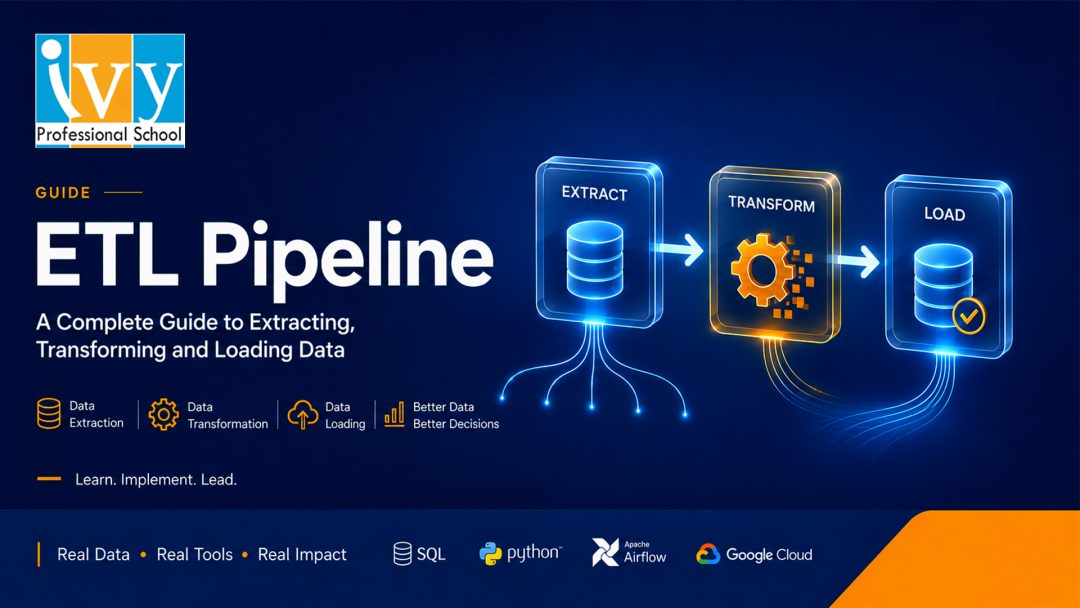
      An ETL pipeline is an automated data workflow that extracts data from one or more sources, transforms it into a required format, and loads it into a target system.

      ETL stands for:

      • Extract
      • Transform
      • Load

      Each stage performs a specific function in the data integration process.

      The primary objective of an ETL pipeline is to convert fragmented and inconsistent source data into reliable information that can be used for reporting, analytics, business intelligence, artificial intelligence, and operational decision-making.

      For example, a retail company may collect data from:

      • Point-of-sale systems
      • E-commerce platforms
      • Customer relationship management software
      • Inventory management systems
      • Digital advertising platforms
      • Payment gateways
      • Customer support applications

      An ETL pipeline can extract data from all these systems, standardise the information, remove duplicates, calculate required metrics, and load the final dataset into a cloud data warehouse.

      Business users can then analyse revenue, product performance, inventory levels, customer behaviour, campaign effectiveness, and profitability from a single source of truth.

      Why Is an ETL Pipeline Important?

      Business data is rarely generated in a clean and consistent format. Different systems may use different field names, date formats, currencies, customer identifiers, product codes, and data structures.

      Without a proper ETL pipeline, analysts may spend significant time manually collecting, cleaning, and combining data before they can perform any meaningful analysis.

      An effective ETL pipeline helps organisations:

      • Consolidate data from multiple systems
      • Improve data quality
      • Eliminate duplicate records
      • Standardise formats and definitions
      • Automate repetitive data preparation tasks
      • Create reliable reporting datasets
      • Support business intelligence platforms
      • Improve regulatory and audit readiness
      • Enable machine learning and predictive analytics
      • Reduce dependence on manual spreadsheets

      The ETL pipeline acts as a bridge between raw operational data and business-ready analytical data.

      How Does an ETL Pipeline Work?

      An ETL pipeline operates through three main stages: extraction, transformation, and loading.

      1. Extract

      The extraction stage involves retrieving data from one or more source systems.

      Common data sources include:

      • Relational databases
      • Enterprise resource planning systems
      • CRM platforms
      • APIs
      • Cloud applications
      • Flat files
      • Excel spreadsheets
      • CSV files
      • XML and JSON files
      • Website logs
      • IoT devices
      • Social media platforms
      • Streaming applications
      • Legacy business systems

      The extraction process must retrieve data without negatively affecting the performance of the source application.

      There are several extraction methods.

      Full Extraction

      In full extraction, the ETL pipeline retrieves the entire dataset during every run.

      This method is relatively simple but can become inefficient when working with large datasets. It may also increase network usage, processing time, and infrastructure costs.

      Full extraction is generally suitable for smaller datasets or systems where incremental tracking is unavailable.

      Incremental Extraction

      Incremental extraction retrieves only the records that have been added or modified since the previous ETL pipeline run.

      This method is more efficient and is commonly used in production environments.

      Incremental extraction may rely on:

      • Timestamps
      • Sequential identifiers
      • Change flags
      • Database transaction logs
      • Change data capture mechanisms

      Real-Time Extraction

      Real-time extraction continuously captures new or updated data as events occur.

      This approach is useful for scenarios such as fraud detection, operational monitoring, recommendation engines, stock tracking, and customer activity analysis.

      2. Transform

      The transformation stage converts extracted data into a clean, consistent, and business-ready format.

      This is often the most complex part of an ETL pipeline because source data may contain errors, inconsistencies, missing values, duplicated records, or incompatible structures.

      Common transformation activities include:

      Data Cleaning

      Data cleaning identifies and corrects inaccurate or incomplete records.

      Examples include:

      • Removing invalid characters
      • Correcting inconsistent spellings
      • Handling missing values
      • Eliminating duplicate records
      • Standardising text values
      • Validating email addresses or phone numbers

      Data Standardisation

      Data standardisation converts values into a consistent format.

      For example:

      • Converting all dates into YYYY-MM-DD format
      • Standardising country names
      • Converting currencies into a common currency
      • Normalising units of measurement
      • Applying consistent product category names

      Data Validation

      Validation ensures that data complies with predefined rules.

      Examples include:

      • Checking that sales quantities are positive
      • Confirming that required fields are populated
      • Verifying that customer IDs follow a valid format
      • Ensuring dates fall within an acceptable range
      • Confirming that foreign keys match reference records

      Data Aggregation

      Aggregation summarises detailed records into higher-level metrics.

      An ETL pipeline may calculate:

      • Monthly revenue
      • Average order value
      • Total units sold
      • Employee attrition rate
      • Customer lifetime value
      • Regional profitability
      • Daily website visits

      Data Filtering

      Filtering removes records that are not required for the target system.

      For example, an organisation may exclude:

      • Test transactions
      • Cancelled orders
      • Inactive customers
      • Duplicate system logs
      • Records outside a reporting period

      Data Enrichment

      Data enrichment adds new information to existing records.

      For example, a company may enrich customer data by adding:

      • Geographic regions
      • Demographic segments
      • Credit categories
      • Product classifications
      • Campaign attribution
      • Risk scores

      Data Joining

      Data joining combines related datasets using common fields.

      For example, order data may be joined with:

      • Customer data
      • Product data
      • Salesperson data
      • Store data
      • Payment data

      The transformation stage should follow clearly defined business rules. These rules must be documented, tested, and regularly reviewed.

      3. Load

      The loading stage transfers transformed data into the target system.

      Common ETL pipeline destinations include:

      • Data warehouses
      • Data lakes
      • Data lakehouses
      • Relational databases
      • Cloud storage platforms
      • Business intelligence systems
      • Analytics applications
      • Machine learning platforms

      There are two common loading methods.

      Full Load

      A full load replaces or reloads the entire target dataset.

      This may be appropriate for smaller datasets, reference tables, or initial data migrations.

      Incremental Load

      An incremental load adds or updates only the records that have changed.

      This approach reduces processing time and is more suitable for large-scale, recurring ETL pipeline operations.

      The loading stage may also apply rules for:

      • Inserts
      • Updates
      • Deletions
      • Historical versioning
      • Slowly changing dimensions
      • Error handling
      • Transaction management

      ETL Pipeline Architecture

      A typical ETL pipeline architecture contains several connected layers.

      Source Layer

      The source layer contains the original systems from which data is collected.

      These may include operational databases, software applications, files, APIs, and external platforms.

      Staging Layer

      The staging layer is a temporary storage area where extracted data is placed before transformation.

      It allows the ETL pipeline to:

      • Preserve raw source data
      • Separate extraction from transformation
      • Reprocess failed records
      • Perform validation
      • Compare source and target data
      • Reduce pressure on operational systems

      Transformation Layer

      The transformation layer applies business rules, validation checks, calculations, mappings, and cleaning operations.

      This layer is responsible for converting raw information into a structured and usable dataset.

      Target Layer

      The target layer stores the processed data.

      Depending on the use case, the target may be a data warehouse, database, reporting system, data lake, or machine learning platform.

      Monitoring and Orchestration Layer

      This layer manages scheduling, dependencies, logging, alerts, retries, and pipeline execution.

      It ensures that each ETL pipeline task runs in the correct sequence.

      For example, a sales transformation process should not begin until customer, product, and transaction data have been successfully extracted.

      Batch ETL Pipeline vs Real-Time ETL Pipeline

      ETL pipelines can process data in batches or in real time.

      Batch ETL Pipeline

      A batch ETL pipeline processes data at scheduled intervals.

      It may run:

      • Hourly
      • Daily
      • Weekly
      • Monthly
      • At the end of a business cycle

      Batch processing is commonly used for:

      • Financial reporting
      • Payroll processing
      • Monthly sales dashboards
      • Inventory reconciliation
      • Regulatory reporting
      • Historical data analysis

      Batch ETL is generally simpler and less expensive to implement.

      Real-Time ETL Pipeline

      A real-time ETL pipeline processes data continuously or within a very short interval after an event occurs.

      Real-time processing is useful for:

      • Fraud detection
      • Website personalisation
      • Live operational dashboards
      • Supply chain monitoring
      • Financial transactions
      • Sensor data analysis
      • Customer behaviour tracking

      Real-time ETL pipelines require more sophisticated architecture, monitoring, and infrastructure than batch pipelines.

      The correct approach depends on the organisation’s data volume, business requirements, latency expectations, and budget.

      ETL Pipeline vs ELT Pipeline

      ETL and ELT are both data integration methods, but the order of transformation and loading differs.

      In an ETL pipeline:

      1. Data is extracted.
      2. Data is transformed.
      3. Data is loaded into the destination.

      In an ELT pipeline:

      1. Data is extracted.
      2. Data is loaded into the destination.
      3. Data is transformed inside the destination system.

      ELT has become increasingly common with cloud data warehouses because these platforms provide scalable computing resources.

      When ETL Is Suitable

      An ETL pipeline may be preferable when:

      • Data must be transformed before entering the destination
      • The target system has limited processing capacity
      • Sensitive information must be removed before loading
      • Strict validation is required
      • Data volumes are predictable
      • The organisation uses traditional data warehouse architecture

      When ELT Is Suitable

      ELT may be preferable when:

      • Large volumes of raw data must be preserved
      • The target platform provides scalable processing
      • Users need access to both raw and transformed data
      • Transformation requirements change frequently
      • The organisation uses a modern cloud data platform

      Many organisations use a combination of ETL and ELT depending on the specific use case.

      Common ETL Pipeline Use Cases

      An ETL pipeline can support a wide range of business and technical requirements.

      Business Intelligence and Reporting

      ETL pipelines prepare data for dashboards, scorecards, and management reports.

      For example, data from sales, finance, operations, and marketing systems can be consolidated into a business intelligence platform.

      Customer 360 Analysis

      Organisations often store customer information across multiple systems.

      An ETL pipeline can combine:

      • Purchase history
      • Support interactions
      • Website activity
      • Marketing engagement
      • Demographic information
      • Loyalty programme data

      This creates a unified customer view.

      Data Migration

      ETL pipelines are frequently used when organisations move data from legacy systems to new applications or cloud platforms.

      The pipeline can map old fields to new structures, validate records, and identify migration errors.

      Machine Learning

      Machine learning models require clean and consistent training data.

      An ETL pipeline can prepare features, remove invalid records, standardise values, and create labelled datasets.

      Financial Data Consolidation

      Finance teams can use ETL pipelines to combine data from accounting systems, bank statements, payment platforms, billing applications, and enterprise systems.

      This supports profitability analysis, cash flow reporting, budgeting, and forecasting.

      Regulatory Compliance

      An ETL pipeline can create auditable data flows for regulatory reporting.

      It can also mask sensitive information, validate mandatory fields, maintain historical records, and generate processing logs.

      Marketing Analytics

      Marketing teams can consolidate information from advertising platforms, CRM tools, email campaigns, social media systems, and website analytics.

      This helps measure campaign performance, cost per lead, attribution, customer acquisition cost, and return on marketing investment.

      Popular ETL Pipeline Tools

      Organisations can build an ETL pipeline using commercial platforms, open-source tools, cloud services, or custom code.

      Common categories include:

      Cloud ETL Services

      Cloud providers offer managed data integration services that support scheduling, connectors, transformations, monitoring, and scalability.

      These services are suitable for organisations already operating within a specific cloud ecosystem.

      Enterprise ETL Platforms

      Enterprise ETL platforms provide graphical interfaces, governance features, metadata management, security controls, and extensive system connectors.

      They are often used by large organisations with complex integration requirements.

      Open-Source ETL Tools

      Open-source tools offer flexibility and lower licensing costs.

      However, they may require more technical expertise for deployment, maintenance, monitoring, and scaling.

      Custom ETL Pipelines

      Data engineering teams may build custom pipelines using programming languages such as Python, Java, or SQL.

      Custom development provides greater control but increases responsibility for testing, documentation, monitoring, security, and maintenance.

      When selecting an ETL pipeline tool, organisations should evaluate:

      • Available connectors
      • Data volume capacity
      • Batch and streaming support
      • Transformation capabilities
      • Ease of use
      • Cloud compatibility
      • Security
      • Monitoring features
      • Scalability
      • Licensing costs
      • Technical skill requirements
      • Vendor support

      Benefits of an ETL Pipeline

      A properly designed ETL pipeline provides several business and technical benefits.

      Improved Data Quality

      The pipeline applies consistent validation and cleaning rules, reducing errors in reports and analytical models.

      Automation

      Manual data preparation tasks can be automated, allowing analysts to spend more time interpreting information.

      Faster Decision-Making

      Reliable and timely data enables business teams to make decisions more quickly.

      Consistent Metrics

      An ETL pipeline helps ensure that departments use the same definitions for revenue, profit, active customers, conversion rates, and other metrics.

      Scalability

      Modern ETL pipelines can process increasing data volumes as an organisation grows.

      Better Governance

      Processing rules, data ownership, lineage, access controls, and audit logs can be incorporated into the ETL pipeline.

      Integration Across Systems

      The pipeline connects isolated applications and creates a unified analytical environment.

       

      Common ETL Pipeline Challenges

      Despite its benefits, developing and maintaining an ETL pipeline can be difficult.

      Poor Source Data Quality

      Missing values, duplicate records, inconsistent identifiers, and incorrect formats can create transformation errors.

      Changing Source Systems

      A change in an API, database schema, file structure, or application field can cause the pipeline to fail.

      Performance Bottlenecks

      Large joins, complex transformations, and high-volume data movement may increase execution time.

      Data Duplication

      Incorrect incremental logic can load the same records multiple times.

      Error Recovery

      A pipeline should be able to recover from partial failures without reprocessing unnecessary data.

      Limited Monitoring

      Without proper logs and alerts, failures may remain undetected until users notice missing or incorrect reports.

      Business Rule Complexity

      Transformation logic can become difficult to manage when business definitions are unclear or frequently changing.

      Security Risks

      ETL pipelines may process confidential customer, employee, financial, or operational data. Weak access controls can expose sensitive information.

      ETL Pipeline Best Practices

      A reliable ETL pipeline should be designed for accuracy, maintainability, scalability, and failure recovery.

      Define Clear Business Requirements

      Before building the pipeline, clarify:

      • Which data is required
      • Where the data originates
      • How often it should be updated
      • What transformations are necessary
      • Who will use the output
      • What level of accuracy is expected
      • How quickly data must become available

      Use Incremental Processing

      Avoid full extraction and loading when only a small portion of the data changes.

      Incremental processing improves efficiency and reduces infrastructure usage.

      Build Data Quality Checks

      Include validation rules at multiple stages of the ETL pipeline.

      Checks may include:

      • Row counts
      • Null-value thresholds
      • Duplicate detection
      • Data type validation
      • Range checks
      • Referential integrity checks
      • Source-to-target reconciliation

      Maintain Data Lineage

      Data lineage documents where data originated, how it was transformed, and where it was loaded.

      This is essential for troubleshooting, governance, and compliance.

      Implement Logging and Monitoring

      Every pipeline run should capture:

      • Start and end times
      • Records extracted
      • Records transformed
      • Records loaded
      • Rejected records
      • Error messages
      • Processing duration
      • Pipeline status

      Alerts should notify the appropriate team when failures or unusual conditions occur.

      Design for Idempotency

      An idempotent ETL pipeline can be rerun without creating duplicate or inconsistent results.

      This is particularly important when recovering from failures.

      Separate Configuration From Code

      Database connections, file paths, API endpoints, scheduling details, and environment settings should be managed through configuration files or secure environment variables.

      Protect Sensitive Data

      Apply encryption, masking, tokenisation, access controls, and secure credential management.

      Sensitive fields should only be available to authorised users.

      Test the Pipeline

      Testing should include:

      • Unit testing
      • Integration testing
      • Performance testing
      • Data validation testing
      • Failure recovery testing
      • User acceptance testing

      Document Transformation Rules

      Every important transformation should have a documented business definition.

      This reduces confusion and makes future maintenance easier.

      How to Build an ETL Pipeline

      Building an ETL pipeline usually involves the following steps.

      Step 1: Identify Data Sources

      List the databases, applications, files, APIs, and platforms that contain the required data.

      Step 2: Define the Target System

      Determine where the processed data will be stored and how users will access it.

      Step 3: Design the Data Model

      Define target tables, fields, relationships, keys, and historical tracking requirements.

      Step 4: Define Extraction Logic

      Decide whether the pipeline will use full, incremental, or real-time extraction.

      Step 5: Define Transformation Rules

      Document cleaning, mapping, aggregation, enrichment, validation, and calculation requirements.

      Step 6: Develop the Pipeline

      Use an ETL platform, cloud service, orchestration tool, SQL scripts, or programming language to implement the workflow.

      Step 7: Add Error Handling

      Create processes for rejected records, retries, partial failures, and notifications.

      Step 8: Test the Output

      Compare source and target data to ensure completeness and accuracy.

      Step 9: Schedule and Deploy

      Deploy the ETL pipeline into the production environment and configure the required schedule.

      Step 10: Monitor and Improve

      Track performance, failure rates, processing time, data quality, and infrastructure consumption.

      ETL Pipeline Performance Optimisation

      As data volumes increase, ETL pipeline performance becomes increasingly important.

      Common optimisation techniques include:

      • Processing only changed records
      • Using parallel processing
      • Partitioning large datasets
      • Reducing unnecessary transformations
      • Filtering data early
      • Optimising database queries
      • Indexing frequently used columns
      • Avoiding repeated data movement
      • Using bulk loading methods
      • Caching reference data
      • Compressing transferred files
      • Scaling compute resources based on workload

      Performance tuning should focus on the complete pipeline rather than one isolated component.

      The Role of ETL Pipelines in Modern Data Engineering

      The ETL pipeline remains a core component of modern data engineering.

      Although technologies and architectures continue to evolve, organisations still need dependable processes for collecting, cleaning, transforming, and delivering data.

      Modern ETL pipelines increasingly support:

      • Cloud-native infrastructure
      • Data lakehouse architecture
      • Streaming data
      • Automated data quality
      • Metadata management
      • Infrastructure as code
      • Continuous integration and deployment
      • Machine learning workflows
      • Data observability
      • Self-service analytics

      The focus is shifting from simply moving data to building observable, governed, resilient, and reusable data products.

      Frequently Asked Questions About ETL Pipelines

      What is an ETL pipeline in simple terms?

      An ETL pipeline is a process that collects data from different sources, cleans and restructures it, and moves it into a system where it can be analysed.

      What are the three stages of an ETL pipeline?

      The three stages are extraction, transformation, and loading.

      Is ETL only used for data warehouses?

      No. An ETL pipeline can load data into databases, data lakes, analytics platforms, machine learning systems, and business applications.

      Can Python be used to build an ETL pipeline?

      Yes. Python is widely used for custom ETL development because it supports data processing, database connectivity, APIs, automation, and workflow integration.

      What is the difference between an ETL pipeline and a data pipeline?

      A data pipeline is a broader term for any automated movement or processing of data. An ETL pipeline is a specific type of data pipeline that follows the extract, transform, and load sequence.

      How often should an ETL pipeline run?

      The frequency depends on business requirements. A pipeline may run monthly, daily, hourly, every few minutes, or continuously.

      What makes an ETL pipeline reliable?

      A reliable ETL pipeline includes automated validation, monitoring, logging, error handling, retry mechanisms, secure access, documentation, and clear recovery procedures.

      Conclusion

      An ETL pipeline is essential for converting raw, fragmented data into accurate and actionable information. It extracts data from multiple sources, applies cleaning and transformation rules, and loads the results into a centralised target system.

      A well-designed ETL pipeline improves data quality, reduces manual effort, supports consistent reporting, and enables business intelligence, machine learning, operational analytics, and regulatory reporting.

      However, creating an effective pipeline requires more than connecting source and target systems. Organisations must carefully define business rules, implement data quality checks, monitor failures, protect sensitive information, optimise performance, and document the complete data flow.

      As businesses generate greater volumes of information, the ETL pipeline will continue to play a critical role in modern data architecture. Organisations that build scalable, secure, and observable ETL workflows will be better positioned to use their data for faster decisions, improved efficiency, and long-term competitive advantage.

      Paste your AdWords Remarketing code here
      0
      0
      0
      0
      0
      0
      0