
Team Dec 26, 2022 No Comments
One of the most competitive and unpredictable business sectors is the insurance sector. It is highly related to risk. As a result, statistics have always been a factor. These days, data science has permanently altered this dependence. In this article, we will give you an insight into the various use cases of data science in insurance industry.
The information sources available to insurance firms for the necessary risk assessment have expanded. Big Data technologies are used to anticipate risks and claims, track and evaluate them, and design successful client acquisition and retention tactics. Without a doubt, data science and insurance easily compliment each other. In this article, we will have a look at the top 10 data science use cases in insurance.
Insurance companies are presently undergoing rapid digital transformation. With insurance digital transformation, a broader range of data is available to insurers. Data science in life insurance enables companies to assemble these data to effective use to drive more business and filter their product offerings. With that, let us have a look at the various applications of data science in insurance industry.
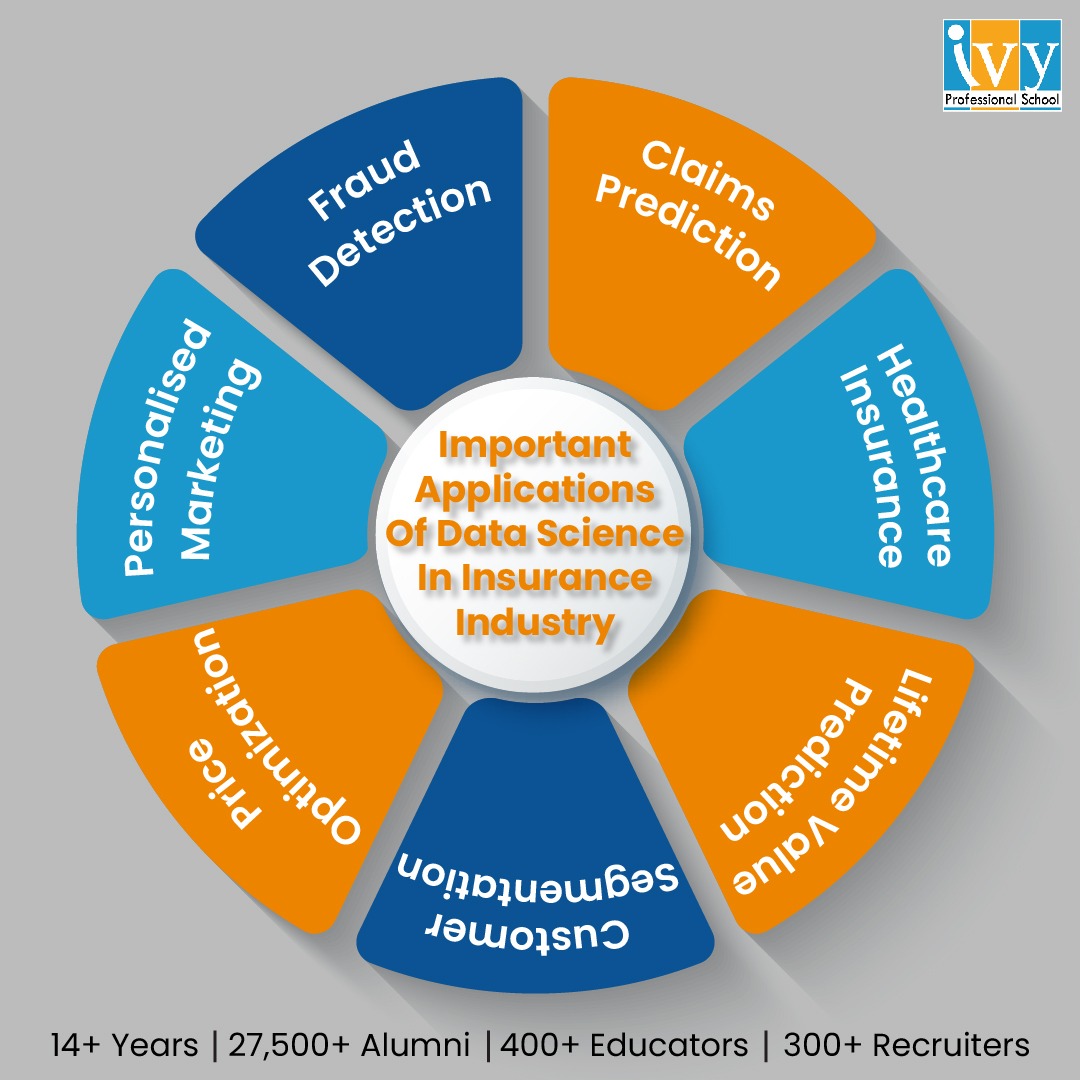
The first case among the various data science insurance use cases is the detection of fraudulent activities. Every year, insurance fraud costs insurance companies a great deal of money. It was able to identify fraudulent activities, suspicious relationships, and subtle behavioral patterns utilizing a variety of methods thanks to data science platforms and software.
A steady stream of data should be provided into the algorithm to enable this detection. Generally, insurance companies employ statistical frameworks for effective fraud detection. These frameworks depend on previous instances of fraudulent actions and use sampling methods to evaluate them. Along with that, predictive modeling techniques are used here for the purpose of analysis and also filtering of fraud scenarios. Evaluating connections between suspicious activities allows the company to identify fraud schemes that went unnoticed previously.
Customers are constantly eager to receive individualized services that completely suit their demands and way of life. In this regard, the insurance sector is hardly an exception. To satisfy these needs, insurers must ensure a digital connection with their clients.
With the aid of artificial intelligence and advanced analytics, which draw insights from a great quantity of demographic data, preferences, interactions, behavior, attitude, lifestyle information, interests, hobbies, etc., highly tailored and relevant insurance experiences are ensured. The majority of consumers like to find deals, policies, loyalty programs, recommendations, and solutions that are specifically tailored to them.
The platforms gather all relevant data in order to identify the primary client needs. Then, a prediction of what will or won’t work is made. Now it’s your turn to either create a proposal or select the one that will work best for the particular customer. This may be done with the aid of the selection and matching methods.
The personalization of policies, offers, pricing, messages, and recommendations along with a continuous loop of communication hugely contributes to the rates of the insurance company.
The idea of price optimization is complicated. As a result, it employs multiple combinations of different techniques and algorithms. Even though using this process for insurance is still up for debate, more and more insurance firms are starting to do so. This procedure entails merging data unrelated to predicted costs, risk characteristics, losses and expenses, as well as further analysis of that data. In other words, it considers the modifications compared to the prior year and policy. Price optimization and customer price sensitivity are so strongly related.
A qualitatively new level of product and service advertising has been reached thanks to modern technologies. Customers typically have different expectations for the insurance industry. Various strategies are used in insurance marketing to boost customer numbers and ensure targeted marketing campaigns. Customer segmentation emerges as a crucial technique in this regard.
According to factors like age, geography, financial sophistication, and others, the algorithms segment customers. In order to categorize all of the clients, coincidences in their attitudes, interests, behaviours or personal information are found. This categorization enables the development of solutions and attitudes especially relevant to the specific user.
CLV (Customer lifetime value) is a complicated factor portraying the value of the user to an entity in the form of the variation between the revenue gained and the expenses made projected into the whole future relationship with a user.
To estimate the CLV and forecast the client’s profitability for the insurer, consumer behaviour data is often used. The behaviour-based models are so frequently used to predict cross-selling and retention. Recency, the monetary value of a customer to a business, and frequency are seen to be crucial variables when estimating future earnings. To create the prediction, the algorithms compile and analyse all the data. This makes it possible to predict whether customers will maintain their policies or cancel them based on their behaviour and attitudes. The CLV forecast may also be helpful for developing marketing strategies because it puts customer insights at your disposal.
Healthcare insurance is a broad phenomenon across the globe. It generally implies the coverage of costs created by the accident, disease, disability, or death. In many nations, the policies of healthcare insurance are effectively supported by the governing bodies.
In this era of quick digital data flow, this niche cannot resist the influence of various data analytics applications. The global healthcare analytics market is constantly evolving. Insurance companies suffer from continuous pressure to offer better services and decrease their costs.
A broad range of data that includes insurance claims data, provider data and membership, medical records and benefits, case and customer data, internet data, and many more are assembled, framed, processed, and turned into valuable results for the healthcare insurance business. As a result, factors like cost savings, healthcare quality, fraud protection and detection, and consumer engagement may all greatly improve.
The future forecast piques the interest of insurance firms greatly. The potential to lessen the company’s financial loss is provided by accurate prediction.
For this, the insurers employ some complicated procedures. A decision tree, a random forest, a binary logistic regression, and a support vector machine are the main models. In order to reach all levels, the algorithms implement high dimensionality and incorporate the detection of missing observations as well as the discovery of relationships between claims. The portfolio for each customer is created in this way.
When talking about data science for insurance, we can conclude that modern technology is advancing quite quickly and entering many different industries. The insurance sector does not lag behind the others in this regard. Statistics have long been used in the insurance industry. Therefore, it is not unexpected that insurance companies are utilizing data science analytics in a big way.
The goal of using data science in insurance is much the same as it is in other industries: to improve the business, increase revenue, and lower expenses.
By now you must have understood the benefits data science has in the insurance sector. And not only in the insurance sector, but data science also finds relevance in almost all sectors of the world. So if you are aiming for a career as an insurance data scientist then this is the time. But before you enter this industry, it is important for you to grab a certificate in the same. Ivy Professional School offers great courses in data science and data engineering that you can enrol in. They offer expert-led courses along with complete placement assistance. Join Ivy and get to work on real-life insurance data science projects to make your resume more reachable to recruiters. For more details visit their website.
There are various applications of data science that include Claim Prediction, Healthcare Insurance, Lifetime Value Prediction, Customer Segmentation, Price Optimization, Personalised Marketing, and Fraud detection.
Using a plethora of data that is presently available, the insurance industry is seeing immense growth. Data anticipate how the industry will operate and also how its relation will be with its customers.
The job role of a data analyst in the insurance industry is to extract, convert, and summarise data as input for studies and reports, and data analysts design, alter, and run computer programmes. Examine the accuracy of the data that insurance firms offer, both in transactional detail and in aggregate, and assist the companies in fixing mistakes.
Team Dec 15, 2022 No Comments
The varied use of big data in all sectors of our life from transportation to commerce makes us realize how crucial it is in our daily lives. In the same way, data science is transforming the healthcare sector. In this article, we are going to have a look at how data science in healthcare can bring about a big and distinctive change.
Nearly 3.5 billion US dollars have been invested in digital health startups and in healthcare data science projects in 2017 enabling companies to meet their ambition of revolutionizing the general notion of healthcare that the world carries. If you are aiming to pursue a career in data science in the healthcare domain, then this is the ideal article for you as you will find many data science in healthcare jobs.
There are numerous factors that make data science crucial in healthcare in the present time, the most crucial of them being the competitive demand for important data in the healthcare niche. The collection of data from the patient via effective channels can help offer enhanced quality healthcare to users. From health insurance providers to doctors, all of them depend on the collection of factual data and its exact analysis to make effective decisions about the health situations of the patients.
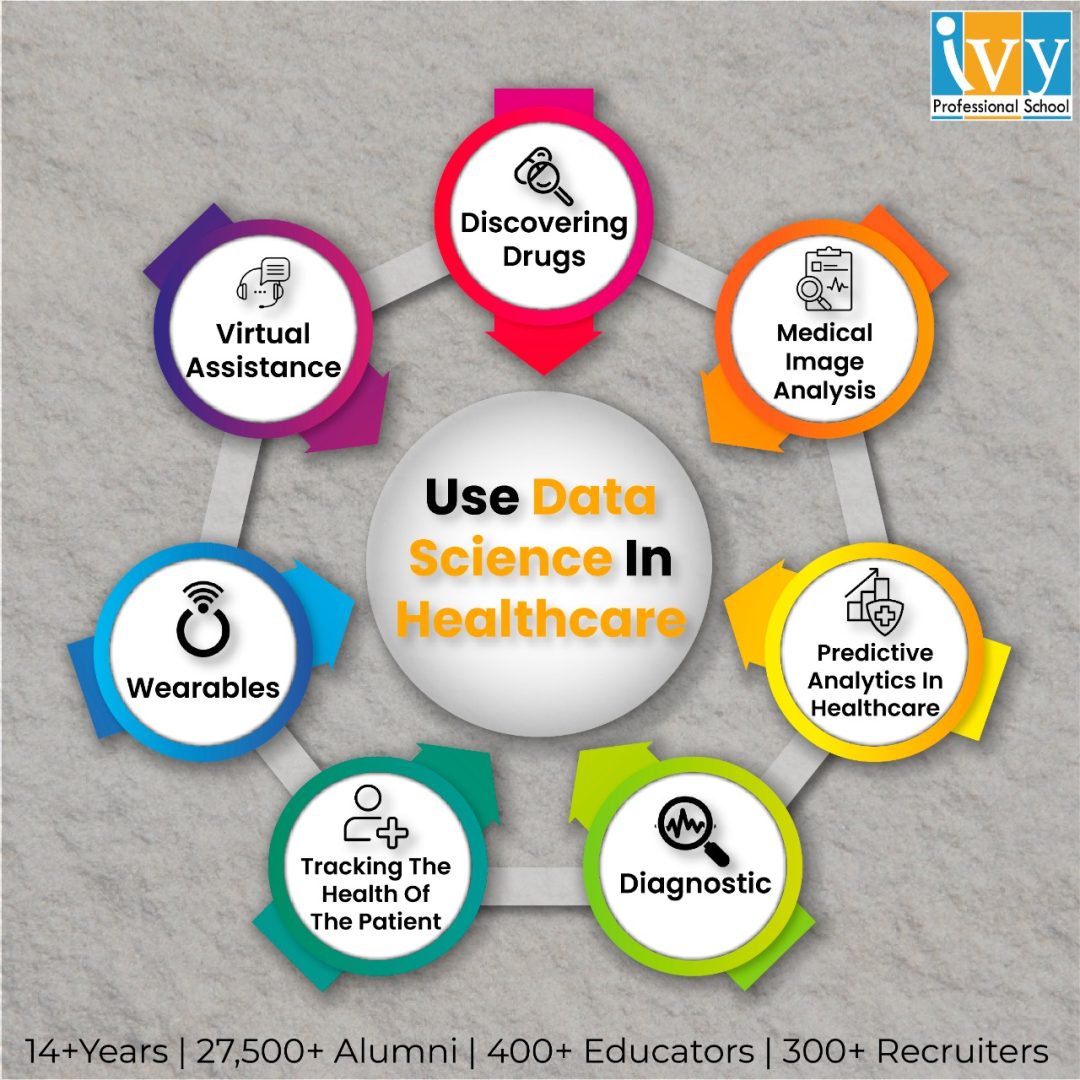
Nowadays, diseases can be anticipated at the earliest stage with the help of data science in healthcare, that too remotely with innovative appliances boosted by ML (Machine Learning). Smart devices and mobile applications constantly assemble data about blood pressure, heartbeat rates, sugar, and so on transferring this data to the doctors as real-time updates, who can structurize treatments accordingly.
The significant contribution of data science in the pharmaceutical industry is to offer the groundwork for drug synthesis using AI. The metadata of the patient and mutation profiling is used for developing compounds that point towards the statistical correlation between the attributes.
Presently, AI platforms and chatboxes are structured by data scientists to allow people to get a better evaluation of their health by putting in several health data about themselves and getting a precise diagnosis. Along with that, these channels also assist users with health insurance policies and guide them to a better lifestyle.
The present-day scenario of the IoT (Internet of Things), which assures optimum connectivity is a blessing of data science. Presently, when this technology is applied to the medical arena, it can help supervise patient health. Presently, physical fitness supervises and smartwatches are used by people to manage and track their health. Along with that, these wearable sensor devices can be monitored by a doctor if they are given access and in chronicle cases, the doctor can remotely offer solutions to the patients.
Data scientists have developed wearable devices for public health that will allow doctors to collect most of the data such as sleep patterns, heart rates, stress levels, blood glucose, and even brain activity. With the help of various data science tools and also machine learning algorithms, doctors can track and detect common scenarios such as respiratory or cardiac diseases.
Data science technology can also anticipate the slightest alterations in the health indicators of the patients and anticipate possible disorders. Several wearables and also home devices as a part of an IoT network employ real-time analytics to anticipate if a patient will encounter any issue based on their current scenario.
A crucial part of medical services, diagnosis can be made more convenient and quicker by data science applications in the healthcare domain. Not only does the data analysis of the patient boosts early detection of health problems, but medical heatmaps pertaining to demographic patterns of issues can also be made.
A predictive analytics model uses historical data, evaluates patterns from the data, and offers precise predictions. The data could imply anything from the blood pressure and body temperature of the patient to the sugar level.
Predictive models in data analytics associate and correlates each data point to symptoms, diseases, and habits. This allows the identification of the stage of the disease, the extent of damage, and the appropriate treatment measure. Predictive analytics in the healthcare domain also helps:
Healthcare professionals seldom use several imaging technologies such as MRI, X-Ray, and CT Scan to visualize the internal system and organs of your body. Image recognition & deep learning technologies in health Data Science enable the detection of minute deformities in these scanned pictures, allowing doctors to plan an impactful treatment strategy.
Along with that, health data scientists are continuously working on the development of more advanced technologies to improve image analysis. For instance, the latest publication in Towards Data Science, the Azure Machine Learning channel can be used in training and optimizing a structure to detect the presence of three common brain tumors, Meningioma tumors, Glioma tumors, and Pituitary tumors.
As a data scientist in the healthcare and pharmaceutical industry, you will have to use your analytical skills to diagnose illness precisely and save lives. The huge amount of data that is sourced from the healthcare niche, from patient data to records kept by government authorities need a skilled analyst to handle it all.
The Covid-19 pandemic has lately shown how important data science in healthcare can be. Not only has data science enhanced the sampling and collection of data but also demonstrated global patterns in the spread of the infection, anticipating the next region where Covid would spread and how government policies can be structured to fight against the contagious disease effectively.
Regarding national-level healthcare, data scientists can help in monitoring the spread of the disease within the nation and coordinate in accordance with the authorities to send resources to the most affected areas.
In this section, we will outline the important responsibilities of a healthcare data scientist:
Evaluating the role of data science in healthcare is also an important responsibility for a data scientist in the healthcare domain. It includes modifying assembled data to align with the objectives and aims of the company.
Here are some of the top advantages of data science in healthcare that you can think of:
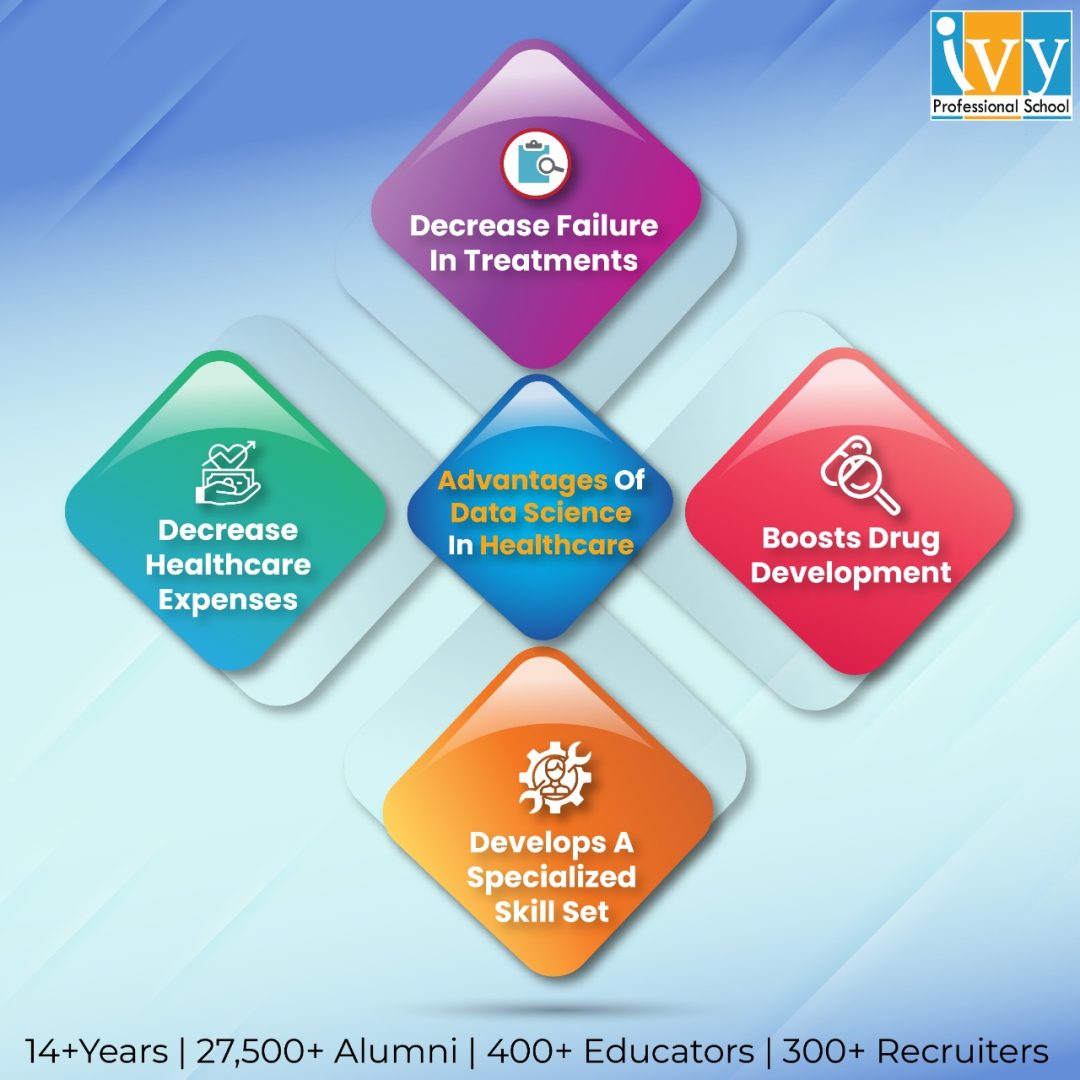
Perhaps the most crucial utilization of data science in healthcare is to decrease errors in the process of treatment via accurate anticipations and prescriptions. Since a substantial portion of data about the medical history of the patient is collected by the data scientists, that stored data can be employed for identifying symptoms of illness and offering a precise diagnosis. Mortality rates have significantly decreased since treatment options may now be tailored and care is given with better knowledge.
The development of medicine needs intensive research and time. However, both effort and time can be decreased by medical data science. Via the usage of case study reports, lab testing results, and previous medical and the impact of the drugs in clinical trials, machine learning algorithms can anticipate whether the drug is going to offer the desired impact on the human body.
In the case of quality treatment that needs to be taken care of, it is essential to create skill sets that can offer a precise diagnosis. Using predictive analytics, one can anticipate which patients are at greater risk and how to get in early to prevent serious damage. Along with that, the huge quantity of data requires to be managed skillfully to stop errors in administration, for which data science can be an ideal solution.
EHRs (Electronic Health Records) can be used by data science specialists in the medical arena to identify the health patterns of patients and stop unnecessary hospitalization or treatments, thus decreasing costs.
The 21st century is making lucrative use of data science in the healthcare niche to boost surgeries, operations, and patient recovery procedures. Apart from the developments in technology and the raised digitization of lifestyles, data science will also help in decreasing healthcare expenses, making quality medical amenities accessible to everyone.
We can conclude that there are various applications of data science in healthcare. The pharmaceutical and healthcare industry has heavily used data science for enhancing the lifestyles of patients and anticipating diseases at an early stage.
Along with that, with the advancements in medical image analysis, it is possible for doctors to find microscopic tumors that were previously difficult to find. Hence, it can be concluded that data science has revolutionized the healthcare sector and also the medical e
Now come to the section, where we can talk about how you can take your data science career to the next level. To establish your career in data science in the healthcare section you will have to have some sort of certification. The best institute for Data Science in this country is Ivy Professional School. Ivy offers a range of certifications that will help you in the future.
Team Nov 24, 2022 No Comments
Finance is among the most important sectors across the globe. Proper management of finance required a lot of time and effort, but that is not the case anymore. The use of data science in finance industry has made the job a lot easier.
By using Data Science, now people can quickly evaluate the finance and make better decisions handling finance. The use of data science in the financial sector has helped the sector in several ways.
Data Science operates as the backbone of the film. Without effective data science tools, a company could not perform effectively. The prominence of data analytics in finance sector has evolved manifold in recent years.
Presently data science is being used in the finance sector for similar reasons. Data science is an area that is used for several finance fields like fraud detection, algorithmic trading, risk analytics, and many more.
It is because of data science in finance that firms now have a better understanding and binding with their users by having an idea about their choices, which ultimately results in a rise in their profit margins. It also helps in identifying the risks and frauds and safeguarding the firm. Therefore, a data scientist is the most crucial asset to a firm without which a company cannot operate.
There are various applications of data science in the area of finance. The applications include:
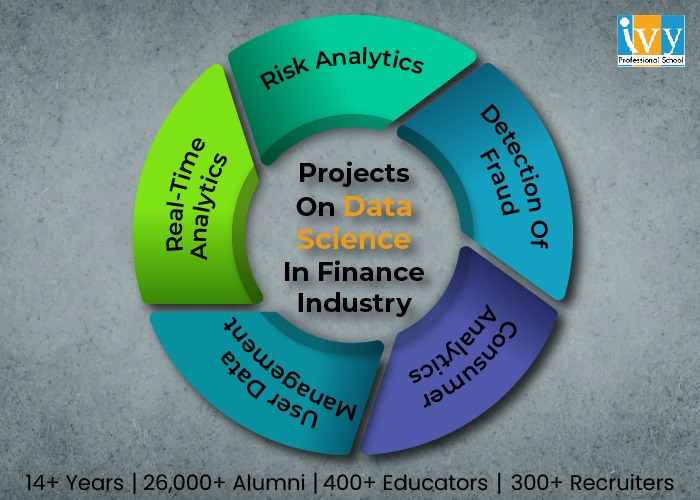
Every entity incurs some risk while doing business, and it has become important to evaluate the risk before any decision is taken. Management of risk is the process by which the risk that is associated while doing business can be assessed, identified, and measures must be taken to control the risk.
It is through effective risk management only that the profits of the business can be raised in the long run. Hence, it is very crucial to evaluate the risks that a company is facing effectively. The utilization of data science in finance sector has made the method of management of risk more convenient. Evaluating the threat has become important for big companies for strategic decision-making and is known as Risk Analytics. In the case of business intelligence and data science in finance, risk analytics has become an important area.
A company can raise its security and also its trustworthiness by using risk analytics of data science. Data is the basis of risk analysis and risk management as it measures the intensity of the damage and multiplies it with the loss frequency. An understanding of problem-solving, mathematics, and statistics is crucial in the area of Risk Management for any professional.
Raw data primarily comprises unstructured data which cannot be put into a standard excel spreadsheet or a database. Data science has a prominent role in using such frameworks to evaluate data.
An entity encounters several kinds of risks which can start from the credit, market, competitors, and many more. The first step involves managing the risk of evaluating the threat. After that, prioritizing and monitoring the risk is important.
Initially, a risk analyst has to evaluate the loss and the pattern of the loss. It is also important for them to identify the source of the loss. So financial data science helps to formulate structures that help in evaluating areas.
A company can use hugely accessible data such as user information and financial transactions using which they can form a scoring structure and boost the cost. This is an important dimension of risk analysis and also management which is used in the verification of the creditworthiness of a user.
The previous payment records of a user must be studied, and then it must be evaluated whether the loan is to be paid to the juicer or not. Several companies presently employ data scientists to evaluate the creditworthiness of users using ML algorithms to evaluate the transactions created by the users.
In traditional analytics, the processing of data was in the form of batches. This implies that data was only historical in nature and not real-time. These created issues for several industries that needed real-time data for gaining exposure to the current scenario.
However, with the developments in technology and advancements of dynamic data pipelines, it is now feasible to access the data with basic latency. With this application of data science in finance, companies are able to measure credit scores, transactions, and other financial attributes without any latency issues.
User personalization is a big functionality of financial institutions. With the help of real-time analytics, data scientists can take views from consumer behaviors and are able to make prominent business decisions.
Financial institutions such as insurance companies use user analytics for measuring the customer lifetime value, raising their cross-sales along with reducing the below zero users for boosting the loss.
Financial institutions require data. And so big data has revolutionized the way in which financial institutions operate. The variety and volume of data are contributed via social media and a huge number of transactions.
The data is available in two forms:
While structured data is more convenient to manage, it is unstructured data that creates a lot of issues. This unstructured data can be managed with various NoSQL tools and can be processed with the help of MapReduce.
Another important aspect of big data is Business Intelligence. Industries use machine learning for generating insights regarding the user and extracting business intelligence. There are various tools in AI such as Natural Language Processing, text analytics, and data mining that general meaningful insights from the data.
Along with that, ML algorithms evaluate financial trends and alterations in the industry values via a thorough evaluation of the user data.
Fraud is a big issue for financial institutions. The danger of fraud has increased in the number of transactions. However, with the development of big data and also in analytical tools, it is now feasible for financial institutions to keep track of fraud.
One of the most commonly practiced financial fraud is credit card fraud. The detection of this form of fraud is because of the development of algorithms that have raised the accuracy of anomaly detection.
Along with that, these detections alert the entities regarding anomalies in financial buys, prompting them to block the accounts so as to decrease the number of losses. Several ML tools can also identify unusual patterns in trading data and notify the financial institution for further investigation into it.
Data science in finance revolves around a broad range of opportunities for investment careers. Areas that focus on technology include data science, cybersecurity, machine learning, AI, and many more.
Finally, we conclude that there are various roles of data science in finance industry. The use of data science revolves mostly around the area of risk management and analysis. Entities also use Data Science user portfolio management for evaluating trends in data via business intelligence tools.
Financial companies employ data science for the purpose of fraud detection for finding anomalous transactions and also insurance scams. Data science is also being used in algorithmic trading where ML plays an important role in making anticipation regarding the future market.
Team Oct 19, 2022 No Comments
In the HR (Human resource) niche, decision-making is changing. At a time when the traditional ways of operating HR are no longer sufficient to keep pace with the new technologies and competition, the field is at crossroads. This is a perfect case study to find out the effectiveness of analytics in HR.
When we talk about analytics in HR there are many facets that come into play. HR analytics aims to offer insight into how effectively to manage employees and attain business goals. Because so much data is accessible, it is crucial for HR teams to initially identify which data is most relevant, along with how to use it for optimum ROI.
Modern talent analytics mix data from HR and other business operations to address challenges related to:
So, a leading Multinational Professional Service Company reached Ivy Professional School for upskilling of their HR department to obtain optimum benefit from their operations.
Upskilling as the name suggests implies taking your skill to a next level. This has various benefits for any organization and the individual as well. Upskilling is very crucial as it:
Each employee searches for a purpose in their work, and innovation comes its way when the goal of the organization aligns with individual career aims.
When an employee leaves an organization, you must fill that position, which again starts the hiring and recruiting processes.
Along with upskilling, this analytics program is aimed at creating domain knowledge among the employees in the HR department. Domain knowledge is basically the knowledge of a specific, specialized discipline or niche, in contrast to general (or domain-independent) knowledge.
Considering the characteristics of the job profile and the expectations set by the company, a special curriculum was created.
Analytics in HR is reaching new horizons now. By using people analytics you don’t have to depend on gut feeling anymore. So now many organizations are inclining towards upskilling their employees in the HR department so that they get a good domain knowledge and become a more valuable resource of their company.
You can also reach out to us if you want us to organize similar analytical programs for your organization. Please email us your requirement at info@ivyproschool.com
Team Sep 21, 2022 No Comments

Updated on August, 2024
Data science interviews can be scary.
Just imagine sitting across from a panel of serious-looking experts who are here to judge you. Your heart is racing, your palms are sweating, and you start breathing quickly. You can feel it.
It’s normal to feel a little overwhelmed in interviews. But here’s the good news: You can overcome this fear with the right preparation.
In this blog post, I will guide you through the essential steps and useful tips for data science interview preparation. This will help you walk into the room feeling confident and positive.
But before that, let’s first understand this…
The simple answer is data science interviews can be challenging. You need to prepare several different topics like data analysis, statistics and probability, machine learning, deep learning, programming, etc. You may have to revise the whole data science syllabus.
And these technical skills aren’t enough. You also need good communication skills, business understanding, and the ability to explain your work to business stakeholders.
You know the purpose of a data science interview is to test your knowledge, skills, and problem-solving abilities. If you haven’t brushed up on your skills recently, it can be a lot of work. So, let’s start from the beginning…
As I said earlier, preparation is the key to success in data science interviews. And it all starts with a strong foundation that involves:
If you don’t have these, you can join a good course like Ivy Professional School’s Data Science Certification Program made with E&ICT Academy, IIT Guwahati.
It will not only help you learn in-demand skills and work on interesting projects but also prepare for interviews by building a good resume, improving soft skills, practicing mock interviews, etc.
Besides, you will receive an industry-recognized certificate from IIT on completion of the course. This will surely boost your credibility and help you stand out in the interview.
Now, I will share some tips for data science interview preparation that have helped thousands of students secure placements in big MNCs.
These tips will boost your preparation and help you understand how to crack a data science interview like a pro.
This is the first and most important thing to do. Why? Because it will show the interviewer that you are serious about the opportunity. It will also help you provide relevant answers and ask the right questions in the interview.
All you have to do is go to the company’s website and read their About page and blog posts to understand their products, services, customers, values, mission, etc. Also, thoroughly read the job description to understand the key skills and responsibilities.
The goal is to find out how your knowledge and experiences make you a suitable candidate for the role.
Your resume is your first impression. It helps you stand out, catch the interviewer’s attention, and show why you are the right fit for the job. So, you have to make sure it’s good.
What do you mention in your resume? Here are some of the important sections:
Here’s the most important thing: Tailor your resume according to the company’s needs, values, and requirements. That means you should have a different resume for each job application.
What projects you have worked on is one of the most common areas where interviewers focus. That’s because it directly shows how strong a grasp you have over data science skills and whether you can use your skills to solve real-world problems.
So, go through each project you have listed in your data science portfolio. See the code you wrote, the techniques you used, the challenges you faced, and the steps you took to solve the problem. You should be able to explain each project clearly and concisely, from the problem statement to the results you got.
Technical interviews are where the interviewer evaluates whether you have the skills and expertise to perform the job effectively. For this, you need a solid foundation of the latest data science skills.
You should revise all the tools and programming languages like Excel, SQL, Python, Tableau, R, etc., which you have mentioned in your resume. Besides, go through the core concepts like data analysis, data visualization, machine learning, deep learning, etc.
Pro tip: Learn from the data science interview experience of people who have already cracked interviews and secured placements. For instance, this YouTube video shares the experience of one of Ivy Pro’s learners who cracked the interview at NielsenIQ:
I can’t emphasize the importance of this step. Being prepared helps you answer effectively and make a lasting impression.
So, find common questions asked in data science interviews and prepare clear and concise answers. Here are some technical and behavioral questions:
These are just examples. You can do your research or ask professionals in your network to find the most common questions. This will surely make you more confident about your data science interview preparation.
Albert Mehrabian, a professor of Psychology, found that communication is 55% body language, 38% tone of voice, and 7% words only.
So, while your technical skills and experience are important, your body language can make or break your chances of success in the interview.
Here are simple ways to improve your body language:
Your body language shows your confidence and attitude, so try to make it perfect.
Mock interviews can boost your data science interview preparation. It helps you improve your answers and body language, increase confidence, and get used to the scary interview environment.
You can simply practice it with your friends or do it alone by recording yourself while you speak. But the best way to do it is to join a course where they let you practice mock interviews.
For instance, Ivy Pro’s Data Science Course with IIT Guwahati helps you practice mock interviews and learn soft skills. This way, you get feedback to understand your strengths and areas of improvement.
Now, you know how to prepare for a data science interview and crack it with confidence. You need to build a strong foundation in relevant skills, gain hands-on experience, and create a compelling portfolio. Your technical expertise, body language, and attitude are what will help you stand out and land your dream job. So, get started with it. The stronger the preparation, the more your chances of success.

Prateek Agrawal is the founder and director of Ivy Professional School. He is ranked among the top 20 analytics and data science academicians in India. With over 16 years of experience in consulting and analytics, Prateek has advised more than 50 leading companies worldwide and taught over 7,000 students from top universities like IIT Kharagpur, IIM Kolkata, IIT Delhi, and others.
Team Jun 12, 2022 No Comments
The CEO of LinkedIn Jeff Weiner had once said that “Data really powers everything that we do.” Data is indeed everywhere, starting from healthcare to search engines. With so many complexities and unpredictabilities in the world of business, there has been an increasing need for analyzing, cleaning and manipulating data. This is where Data Science comes in. Data Science is defined as the field
Team Nov 06, 2021 No Comments
Today, we are going to learn about one of the most interesting and exclusive concepts that apply everywhere in business applications: Case Studies. A case study is an important and useful way to learn about the practical applications of business using science models. These science models are usually those which help us apply logic to business scenarios. Our very t
Anubinda Oct 16, 2021 No Comments
How Artificial Intelligence Can Improve Your Pay-Per-Click Ad Efforts:
Improving your PPC efforts is much easier when you implement A.I. in your strategy. Because of this, humans are still highly involve
Anubinda Oct 01, 2021 No Comments
In this blog, we will be covering the conversation of Eeshani Agarwal and Ruchika Saha, who bring us the second episode of the Learn to Visualize series where we are going to learn about Dashboard Actions. Eeshani Agarwal (Data Storyteller and Data Visualization Expert (Tableau, PowerBI, VBA, SQL, Excel). Coached 9,000
Anubinda Sep 24, 2021 No Comments
Elon Musk announces humanoid robot Tesla Bot that uses artificial intelligence :
Billionaire Elon Musk has announced that Tesla is working o