
Team Apr 19, 2024 No Comments

Updated on 23rd August, 2024
Choosing a career option after graduation can feel overwhelming. There are so many options, and it’s natural to feel unsure about the best path.
The good news is that the 2024 job market is thriving, with opportunities in both traditional and unconventional careers. You just have to find a path that aligns with your interests and skills, and it will give you both financial stability and a sense of fulfillment.
This blog post shares the 5 best career options after graduation in 2024. This will help you clear the confusion, get on the right track, and build a rewarding future.
A good career lets you solve real-world problems, helps you make good money, satisfies your soul, and challenges you to grow. But with so many options, it can be difficult to know where to start. So here are some of the best career opportunities after graduation you can try:
This career option is now trending worldwide. Businesses across industries are looking for expert data scientists to transform raw data into valuable insights.
Data scientists use advanced analytics tools, programming, and problem-solving skills to uncover patterns in raw data, predict trends, and help businesses make informed decisions.
No wonder data science is a fulfilling career that offers impressive salaries and helps you make a real-world impact. In fact, the average salary of a data scientist in India is an astounding ₹12,00,000.
To become a data scientist, you may require a B.Tech degree or a bachelor’s degree in Mathematics, Statistics, or Computer Science. Many companies favor candidates with master’s degrees in data science or related fields, although strong skills and a good portfolio can open doors.
You can join Ivy Pro School’s Data Science and AI course with IIT Guwahati to learn Data Science from scratch, complete real-world projects, and land high-paying jobs in MNCs.

If you want a career option after graduation that doesn’t involve working 9-5, content creation can be a good choice.
As a creator, you make content on digital platforms to build an audience. The content could be videos on YouTube, reels on Instagram, blog posts on your website, stories on Medium, or written posts on LinkedIn and Twitter.
You basically have to talk about things you are passionate about. At the same time, the content should provide value to the audience, either by entertaining, educating, or inspiring them.
Content creation lets you be your own boss. You can be creative, talk about things you like, and make a positive impact on the world.
Also, you can make good money from ads and sponsorship opportunities and even sell your products. In fact, 52% of creators earn $50K-$100K per year by spending 10 hours or less per week on content creation.
However, content creation isn’t as easy as it sounds. You have to learn skills like writing, video production, storytelling, content marketing, etc. You have to consistently create content, remain updated with the world, and keep yourself positive even when things don’t work for you.
This needs no introduction. You already know how reputed a career in civil services can be. Frankly, almost every graduate thinks of becoming an IAS, IPS, or IRS at least once in their college life.
A career in civil service gives you everything you can think of- job security, good salary, job satisfaction, recognition, opportunity to serve the country.
Civil servants are the backbone of the country’s administration. They shape policies, manage public resources, and directly impact the lives of millions. A career in civil services lets you serve your country and make a tangible impact on society.
Now here comes the bitter truth: the path to becoming a civil servant is really difficult. You have to clear the highly competitive UPSC Civil Services Examination, one of the toughest examinations in the world. The extensive syllabus, subjective exams, and unpredictable question patterns make it difficult.
But if you are a hard worker with perseverance and a passion to serve the country, you may succeed and become a civil servant.

Software engineers make apps and websites we use daily. They write the code to transform ideas into functional software that solves real-world problems.
Software engineering is all about mastering programming languages like Python, Java, C++, or HTML. You will work on various stages of the development process, from coding to testing and deployment. You will also work in teams and bring big projects to life.
Since technology constantly evolves, this field lets you learn new things and face exciting new challenges. You can do a full-time job or work as a freelancer, depending on your choice. The growing demand for skilled software engineers means you will have job security and competitive salaries.
If you have a logical mind, enjoy creating something from scratch, and love technology, software development could be an incredibly rewarding path.
If you are looking for a unique career option after graduation, you can start your one-person business. This could be a good path if you like to take risks and explore different interests.
This career option lets you build products and services to help people. You can be a freelance writer, graphic designer, or website developer to sell your services. Or you can start your ecommerce store. Or you can create online courses based on your expertise. Or you can be a personal trainer and help people get fit. There are numerous ways to do it.
But whatever you choose, a one-person business gives you the ultimate freedom and flexibility. You set your hours, choose your clients or products, and pursue your passions directly. And now, using AI, you can do multiple things and boost your one-person business.
To build a successful one-person business, you have to create really good products and services. Besides, you need certain skills (writing, design, marketing, selling), an entrepreneurial mindset, a desire to work hard, and strong self-discipline. The initial months can be difficult, but when you do it consistently for a long time, you will get incredible rewards.

Now you know what the best career options after graduation are. So, if you are interested in technology and mathematics, you can choose to pursue a career in data science and AI.
Ivy Pro School’s Data Science and AI certification course with IIT Guwahati can be a good starting point.
This is an online class with live doubt-clearing sessions. You will be taught by professors from IIT and experts from companies like Amazon, Google, Microsoft, etc.
This 45-week training teaches you in-demand skills like Data analytics, ML, and Gen AI with tools like Adv Excel, SQL, Python, Power BI, and Tensorflow.
Since 2008, Ivy has trained 29,000+ graduates working in over 400 organizations. If you want to be the next one, visit this page to learn more about the Data Science and AI course.
Which careers have the highest scope in the future?
Careers with the highest scope are mostly related to technology and management. They include data scientists, AI and ML engineers, software developers, project managers, etc. The global AI market is expected to reach USD 1,345.2 billion by 2030, and the data science market is expected to reach USD 776.86 billion by 2032. This means there will be many more jobs in these fields.
Which skills are the best after graduation?
Technical skills like data science, programming, generative AI, and digital marketing are some of the best you can learn after graduation. Soft skills like communication, public speaking, negotiation, leadership, problem-solving, time management, and creative thinking can also help you a lot in your career.
What are some unique career options after graduation?
AI and ML engineering, data storytelling, ethical hacking, content creation, podcasting, life coaching, and freelancing are some unique career options after graduation. But before you choose a career, make sure you are interested and enthusiastic about it, because you will be doing it for the rest of your life.
What are the best career options after graduation in science?
An MBA, data science, machine learning, programming, research scientist, and professor are some of the best career options after graduation in science. These are just a few examples, you can conduct further research to figure out a career based on your interests and skills.
What courses can I take after graduating with a commerce degree?
Business analysis, financial analysis, data science, an MBA, accounting, and banking are some of the courses you can take after graduation in commerce. They can help you learn in-demand skills and get high-paying jobs to achieve your career goals. At Ivy Pro, we can help you become a skilled data scientist or business analyst with our comprehensive live online courses taught by experts.

Eeshani Agrawal holds an MS in Civil Engineering from Texas A&M University (USA) and has over 16 years of experience in data visualization, storytelling, and analytics. She has consulted for top engineering, manufacturing, and consulting firms worldwide and has coached over 9,000 professionals and students from leading institutions like IITs, IIMs, and ISI.
Team Apr 17, 2024 No Comments

It was 1663 in London. John Graunt, a genius statistician, did something that became a pioneering example of data analytics.
He collected and analyzed mortality data. At that time, the terrible bubonic plague caused deaths in London. His analysis let him find patterns in how many people died, where, and when.
This helped him figure out how the disease was spreading and what might be done to slow it down. Although his analysis methods were basic, Graunt showed us the power of analyzing data to understand a complex problem.
Over 360 years have passed, and data analytics have changed tremendously. Now, we have complex data coming from everywhere. The internet and digitization have created an explosion in the quantity and types of data generated.
Luckily, we have advanced computers and powerful statistical tools that help us analyze massive sets of data and find valuable insights. Now, data analysis is a rapidly growing field that helps organizations make better decisions, optimize processes, reduce risks, and improve their overall performance.
In this post, we will see what is data analytics, its application, its types, and how it’s done. Let’s start with the basics.
Data analytics involves studying raw data to find hidden patterns and useful insights.
This data could be about customer behavior, sales figures, website clicks, sensor readings, etc. This raw data is often overwhelming and difficult to understand. Data analytics provides the tools and processes to understand it.
The first thing we do to analyze data is collect data from various sources. Then, we clean and organize this data to make it accurate and consistent. Next, we apply different analytical methods to find insights in the data.
Insights helps organizations make informed decisions. For instance, businesses might use the findings to improve marketing campaigns, streamline operations, or develop new products. Similarly, scientists might use it to predict disease outbreaks or understand climate change.
No wonder, data analytics is one of the highest-paying skills in 2024.

Data analytics provides insights that replace guesswork and help make informed decisions. This optimizes processes, cuts costs, and improves outcomes for businesses. Here are some examples of how data analytics is used in real life:
These are just a few examples. Data analytics is being used in countless ways to improve our lives. And as technology advances, the applications of data analytics will only continue to expand.
Now you understand what is data analytics and what are its applications. So, let’s move on to the next section:

Data analytics can be divided into four main categories, each having a specific focus:
Understanding these types is crucial. It helps data analysts choose the right approach to answer specific questions and make better decisions.
So, Netflix is incredibly focused on data analytics. They track everything from what you watch to when you pause, scroll, or abandon a show. And they use this to improve recommendations. Let’s take the example of Netflix to understand the steps in data analytics:
Data analysis often requires several iterations. You may need to revisit earlier steps to collect additional data, refine your analysis methods, or answer new questions that arise during the process.

Now that you know what is data analytics, if you want to learn this in-demand skill from the basics, you can join Ivy Pro School’s Data Analytics with Visualization Certification Course.
This course will teach you all the industry-relevant tools like Adv. Excel, SQL, Tableau, Power BI, Python, etc. These skills make your resume impressive and help you land high-paying data analytics jobs.
Ivy Pro School has been a top-ranked Data Science and Analytics course provider since 2008. Fortune 500 companies like Tata Steel, Accenture, ITC, Cognizant, Capgemini, and more actively recruit Ivy’s graduates.
Visit this page to learn more about Ivy’s Data Analytics with Visualization Certification course.
Team Apr 15, 2024 No Comments

What’s the benefit of a data science course? Aspiring data scientists often get that question.
Data science is one of the most in-demand career opportunities with lucrative salaries. Doing a course helps you launch yourself in the data science world and be a part of the technology revolution. A course lets you upskill and make your career more rewarding.
If you still doubt whether you should invest in a course, this post is for you.
We have shared seven benefits of data science courses and why investing in this skill could be a great career decision.
Here are 7 reasons why taking a data science course is one of the best things to do.
Yeah, you learn a lot of skills. You master things like statistical analysis, machine learning techniques, data visualization, and programming.
These in-demand skills not only help you get the best jobs, but they’re also highly transferable across industries. Companies in healthcare, finance, e-commerce, and education – they are all looking for data science expertise.
This means your data science skills will give you unparalleled job security in a rapidly changing world.

A data science course helps you learn industry-relevant tools. Whether you are a newcomer or a professional, you gain expertise in the programming languages and software that businesses rely on.
For example, programming with Python or R, building models in platforms like TensorFlow and PyTorch, and mastering data wrangling with tools like SQL and Pandas.
If you are getting started, a data science course teaches you the fundamentals and takes you to advanced concepts. Whereas if you are a professional, a data science course lets you deepen your knowledge, explore advanced techniques, and fill in any gaps in your existing skill set.
The best data science courses go beyond theory. They help you experience projects with real-world challenges and complexities.
For instance, you may get to handle problems like analyzing customer behavior, predicting market trends, or optimizing logistical processes.
This is one of the best data science course benefits because it helps you apply your knowledge and get hands-on experience. You learn problem-solving, critical thinking, and turning data into actionable insights.
For instance, Ivy Pro School’s Data Science and AI certification course lets you complete 50+ real-world projects. These projects make your portfolio impressive. You can showcase your skills to potential employers and increase your chances of job success.
Technical skills alone are not enough to get a job. You must also know how to present yourself.
That’s why many good data science courses include comprehensive career support. They help you write a compelling resume that highlights your expertise, teach you how to appear in interviews and conduct mock interviews to boost your confidence.
This type of holistic preparation is invaluable. It not only teaches you communication skills but also makes you confident and courageous. Overall, you get a major advantage in the competitive job market.

When you complete a data science course, you get rewarded with an industry-recognized certification. Now, this isn’t just a piece of paper – it’s a symbol of credibility.
Certification tells employers that you have been examined by a reputable institution and have shown proficiency in essential data science skills.
The benefits of data science certification are remarkable. It helps you in the hiring process. The certificate sets you apart, shows your commitment to professional development, and immediately makes your resume more impactful.
Ivy Pro School’s Data Science and AI certification course is made in collaboration with IIT Guwahati, IBM, and NASSCOM. These reputed names make your certificate significantly valuable and help you land your dream job.
One of the biggest benefits of data science courses is salary increment. Whether you are switching careers or you are a professional looking to level up, a data science course can significantly boost your earning potential.
A course makes you more skilled and capable of solving problems. Businesses will need you because you can find patterns in raw data and help them make informed decisions. These decisions help businesses make millions in profits and avoid deadly mistakes.
Besides, the projects and certifications give you experience and credibility that make you irreplaceable in the job market.
You become confident when you learn new things. A course helps you with that.
A data science course gives a rigorous learning opportunity. You grasp new concepts and apply what you have learned in real-world situations. You develop the ability to think critically, approach problems with a new perspective, and trust your data-driven solutions.
This confidence boosts your career. You speak with authority, take calculated risks, and face challenges with an “I can do this!” attitude. Apart from the job skills, a course helps you become a new person and unlock your full potential.

Now you know the benefits of data science courses. So, if you want to make a career in this thriving field, it’s time to make your move.
Ivy Pro School, in collaboration with IIT Guwahati, offers a comprehensive Data Science and AI certification course designed to fast-track your success. It lets you:
This is your chance to be a data science expert and make your career more rewarding. Visit this page to learn more about the course.
Team Apr 08, 2024 No Comments

AI is everywhere. From ChatGPT to Tesla electric cars, we are now surrounded by AI technology. With all the amazing things AI can do, more and more people are interested in learning AI and becoming a part of this technological revolution.
If you are one of those people, the first thing that would come to your mind is: Is AI hard to learn? To be honest, it seems hard. The thought of complex algorithms and years of dedicated study may appear intimidating.
The truth? We will explore exactly that in this post. Keep reading, and you will know whether AI is hard to learn, what you require to learn it, and some tips to master the skill.
The simple answer is it depends. If you have a smart approach with which you develop the required AI skills and practice them consistently, you will learn it without much difficulty. But if you don’t have any study plan, the right resources, or the discipline, it will definitely feel harder.
The truth is that learning AI is a journey. You need a good understanding of programming and math, an ability to keep up with a rapidly changing field, and a drive to constantly learn and grow. The good thing is it doesn’t need any special talent. Anybody dedicated and curious would be able to learn AI.
And remember that nothing worth having comes easy. If you set out to learn AI, and it appears somewhat hard, remember that it will be worth it. Because right now, AI is in big demand. Learning AI can take you to your dream job with impressive pay and work satisfaction.
So, the question is not, “Is AI hard to learn.” The real question is what it takes to learn AI. And that brings us to the next section.

Here are the essential skills you will need to get started with AI:
So, is AI hard to study? Well, getting started with AI might feel overwhelming, but a strategic approach will make your journey much smoother. So, here are 4 actionable tips that will help you master AI:
Take small steps by learning the basics. Here is what you can start with:
Once you have built a strong foundation, you can explore the next level skills:
Here are some of the most widely-used AI tools within the Python ecosystem:
Artificial intelligence can be difficult to learn if you keep memorizing theory. The best way to solidify your AI skills is to get real-world experience.
You can start with small, well-defined projects that align with your interests. For example, try building a basic image classifier, a sentiment analysis tool for social media posts, or a game-playing AI using reinforcement learning.
The process of working through problems, debugging code, and seeing your AI models come to life will help you learn more than just reading theory.

If you want to learn AI without much hassle, you can join Ivy Pro School’s Data Science and AI certification course.
This is an online course where you will learn all the topics like Data Analytics, Visualization, Machine Learning, Deep Learning, and Gen AI with tools like Adv. Excel, SQL, Python, Keras, Tensorflow, etc.
This course is in collaboration with IIT Guwahati, IBM, and NASSCOM. This triple certification will help you stand out in the eyes of recruiters and secure better job opportunities.
Besides, you will be taught by professors from IIT and professionals from companies like Google, Amazon, and Microsoft, which means the teaching will be world-class.
If you are still wondering, “Is AI hard to learn?” you will figure it out in this course.
Team Apr 04, 2024 No Comments

Why be a data scientist? Well, the simplest answer is data science is a perfect career, with high job security, impressive salary, and work satisfaction.
Data science employment is projected to grow at an astounding 35% from 2022 to 2032, which is more than the average for all occupations. And approximately 17,700 annual openings are expected for data scientists over the decade.
A data science career involves collecting, cleaning, and analyzing complex datasets to uncover patterns, trends, and insights. Those insights are what help companies make better decisions about products, marketing, or business strategy.
But what makes data science such a hot career?
In this blog post, we will see in detail the 7 reasons to become a data scientist. By the end of this blog, you will know why you should choose this career and how you can start your journey.
If you are interested in maths, statistics, and computers, data science might be the path you should choose. It’s a career that challenges you, lets you learn new things, and helps you grow. Here are the top 7 reasons why data science as a career could be a great choice for you.
Yeah, if you are a skilled data scientist, you may get plenty of job offers. Why? Businesses are drowning in data. They have data coming from everywhere- from online purchases, social media, or market behaviors. But they don’t know what that data means.
So, companies need experts to study those data and uncover hidden patterns and trends for informed decision-making. Data scientists are the ones who make sense of that data. They study the raw numbers and transform them into insights that help organizations make better business decisions.
That’s how data science helps businesses gain a competitive advantage, putting the skill in high demand. Now you know why a career in data science could be a good option for you.
Let’s be honest. We all want jobs that pay not only our expenses but also help us fulfill our desires.
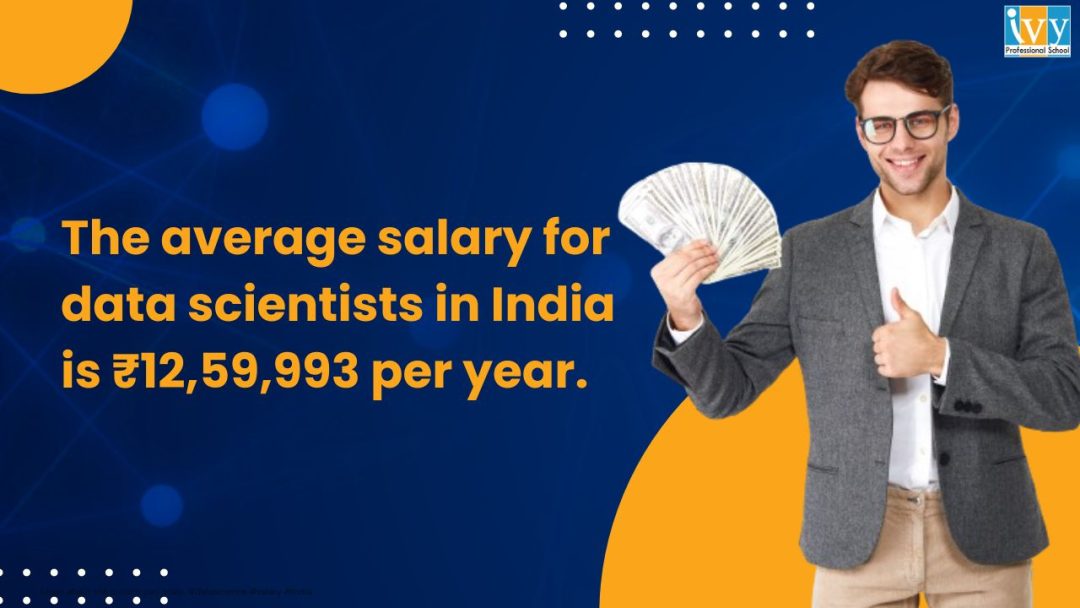
Data scientists definitely have that covered. According to Glassdoor, the average salary for data scientists in India is an impressive ₹12,59,993 per year.
The amount may vary depending on the job location and your experiences, but the earning potential in this field is seriously impressive. That’s a good reason to become a data scientist.
And it makes sense to pay skilled data scientists well. After all, they help the company make smart business decisions that directly impact a company’s bottom line.
Data science consists of many skills. You will study programming languages like Python and R, statistics, machine learning, data visualization, cloud computing, etc.
This versatile skill set opens many doors across various industries. You could become a data scientist in financial institutions, analyzing market trends. You can enter the healthcare industry and help innovate medical research. Or, if you love movies, you can take a role in movie studios to predict box office success and optimize marketing campaigns.
So, why be a data scientist? Well, because data science won’t trap you in a single career path. As your interests evolve, so can your job.
At its heart, data science is all about solving problems. You study the data to find answers to real-world questions.
And this process of problem-solving makes you good at the thing. You learn to break down complex challenges into smaller steps, think creatively, and find better solutions backed by data. That’s why a career in data science is a good option for those seeking to grow in life.
The ability to solve problems helps wherever you go. Whether you’re managing a project, stuck in a difficult situation at work, or simply figuring out which smartphone to buy, problem-solving skills are a lifesaver.
Why be a data scientist? Well, it doesn’t only add numbers to your bank balance, it also lets you make an impact on the world.
Data science lets you solve the world’s biggest problems that positively impact the masses.
As a skilled data scientist, you can help fight disease by analyzing medical records, improving education using insights about how students learn, or even combating climate change by analyzing energy consumption.
Working in data science means you can put your skills toward causes you really believe in. This is what makes the work meaningful, and it’s one of the best reasons to study data science.
One of the impressive reasons to become a data scientist is that this career not only teaches you technical skills but also improves your personality. For instance, data science projects teach you how to work in a team, communicate complex ideas, and manage different perspectives in a group.
This helps you develop your soft skills and become good with people. You also learn to manage professional and personal relationships. Besides, data science teaches you to be analytical, which helps you see situations from unique angles, think critically, and make smart decisions.

This is an underrated reason to become a data scientist. Job satisfaction is crucial for a happy and fulfilling life. And data science helps you achieve that.
You see, data science is a mentally stimulating career, full of puzzles to solve and new things to learn. You get to be creative, collaborate with people, and find solutions that make a real-world impact.
And then you see the tangible impact of your work, whether that’s a new product launch, detecting fraudulent financial transactions, or helping an NGO in fundraising. This fulfills you from within and makes you satisfied.
Now that you know 7 reasons to become a data scientist, I guess you must be excited about this career path and wondering where to begin. Well, here are three things you could do to start your career:
Taking online courses may be the best and fastest way to master this skill. You can consider Ivy Pro School’s executive certification course in Data Science and AI.
This program is in collaboration with IIT Guwahati, IBM, and NASSCOM, so you can already understand the importance of its certification.
Besides, professors from IIT and professionals from companies like Google, Amazon, and Microsoft will be teaching you so that you become job-ready.
In this online course with live doubt-clearing sessions, you will learn all the in-demand topics like Data Analytics, Visualization, Machine Learning, and tools like Adv. Excel, SQL, Python, Power BI, etc.
You already know the reasons to become a data scientist. Now, if you want to master this skill, visit this page to learn more about the Data Science and AI executive certification course.

Team Mar 14, 2024 No Comments

Ever found yourself looking out the window at work, daydreaming about a completely different job? Well, that might be a sign you need a career change.
Switching careers can be a bit scary. The thought of leaving the comfort of your current job and trying something new can be unsettling. We understand that.
However, taking a step into the unknown can bring better opportunities. Changing careers might even lead you to a job that brings more satisfaction and a bigger paycheck.
And it’s not that difficult. You just have to take courses to learn new skills. Like you can take Ivy Pro School’s Data Science certification course with IIT Guwahati to upskill and land better jobs.
But how to know if it’s time to change careers? If you feel stuck, you are in the right place. This blog post explores 5 clear signs you need a career change and provides guidance on what your next steps should be.
Learning, growing, and taking on challenges make us happy. Harvard Health says doing challenging activities helps us improve our cognitive skills.
However, some jobs are all about doing the same things over and over. They don’t give you new challenges. There are no creative problems to solve and no chances to learn new skills. If this sounds like your job, you might feel stuck and really unhappy with what you do.
This stagnation can harm your cognitive function and decrease your motivation to take up challenges. So, if your job doesn’t let you grow, maybe it’s a sign you need to change careers.
A survey of 2,000 US employees found that 46% are bored at work for at least three days every workweek. Another study shows that around half of employees are either bored or exhausted.
A bit of boredom now and then is okay. But if you’re always waiting for the clock to hit 5 pm or daydreaming about anything but your tasks, it might be a sign you need a career change.
This boredom can negatively impact your productivity, mental health, and even physical health. It can also decrease your motivation, willpower, and creativity. That’s not good.
So, if you are constantly looking for ways to distract yourself at work or if your mind wanders during meetings or presentations, it might be time to find a career that excites you.

Recognition and appreciation in the workplace make employees happy. This creates a positive workplace where employees feel driven to tackle challenging tasks.
But, if your hard work consistently goes unnoticed, or if you feel like your skills and talents aren’t being fully utilized, it’s a red flag. This lack of recognition can decrease your morale and work satisfaction.
Your contributions may get consistently overlooked, or maybe you don’t get the promotions despite your impressive performance. If that’s the case, it might be a sign it’s time to change careers and find a position where your talents are recognized.
No matter where you work or what you do, you should surround yourself with people who make you feel positive, encourage you to learn, and push you to grow.
You spend around one-third of your life at work. Hence, how you see your work can have a major impact on your life.
Doing some meaningful work can help you derive a feeling of fulfillment. No wonder 90% of people are willing to earn less money to engage in meaningful work.
But most jobs are simply boring and don’t have a higher purpose. They don’t make you feel satisfied within. And this can drain your energy and lead to burnout.
Some work may clash with your values. For example, you may see your company engage in unethical practices. This misalignment can create internal conflict.
So, if you find yourself constantly questioning the purpose or value of your work, it might be a sign you need a career change. After all, shouldn’t your work contribute to something you believe in?
Feeling stressed once in a while is common. But if you always feel drained, anxious, or burnt out, it’s a bad sign. Chronic stress increases the chances of depression and affects your sleep, digestive system, and immune system.
It goes without saying how you feel at work can impact your life and relationships outside. 83% of US workers suffer from work-related stress, and 76% of them report that workplace stress affects their personal relationships.
So when is it time to change careers? Well, when your job costs your mental peace. If your work environment is a constant source of negativity, it’s time to prioritize your well-being and explore a new career.

The above 5 signs indicate you need a career change. The good news is there’s a whole world of exciting possibilities out there!
However, this transition won’t happen overnight. It needs careful planning and proactive steps. Here is how you can make a smooth career change:
Study yourself: Identify your skills and find what excites you. For example, you may love statistics, maths, and technology.
Research jobs: Now, see which industries and roles match your interests. Here, a Data Science career can be a perfect fit.
Upskill: Consider taking courses, workshops, or certifications to bridge skill gaps. For instance, Ivy Pro School’s Data Science course with IIT Guwahati can be a great help.
Update resume: Highlight the skills and experiences relevant to your new career. That’s why Ivy Pro School helps you complete real-world projects that you can showcase in your resume.
Network: You have to build your professional network to land better jobs. The same reason Ivy Pro School helps with holistic development and networking.

If you are into technology and maths, Data Science might be a great path for you. The need for skilled data scientists is growing, which means a promising future.
Check out Ivy Pro School’s Data Science and AI Certification Course if you are considering a career switch. This top-ranked course makes you triple-certified by IIT, IBM, and NASSCOM, helping you stand out to employers.
IIT professors and experts from Amazon, Google, and Microsoft will guide you, ensuring you grasp the concepts clearly. You will learn all the in-demand tools like Adv. Excel, SQL, Python, and more to get ready for the job market and increase your chances of getting hired.
Since this is an online course, you can study from anywhere and open doors to high-paying and satisfying jobs. It’s time to take that first step to changing careers. Visit this page to find out more about the course.
Team Mar 07, 2024 No Comments

Updated on 10th August, 2024
Your skills are your superpower. They help you get your dream job, make big money, and find joy in your work.
Every job requires skills. But certain skills play a crucial role in business growth, and hence, employers value them the most. If you can master those skills, you can expect not just a handsome paycheck but also satisfaction from your work.
But the problem is the job market is constantly evolving, and so are the high-paying skills.
So what are those in-demand skills you should learn in 2024? Well, we have discussed 7 best high-income skills in India in 2024 that will help you secure a rewarding career. See which of these skills excites you the most, and then get into it with full force.
In today’s data-driven world, it’s always good to learn this high-paying skill. Data Science involves collecting and analyzing large amounts of data to find hidden patterns and trends.
Companies are drowning in data and need help understanding it. Data scientists turn this data into insights that companies can use to make better decisions, create targeted advertising, or even predict future trends. That’s why the average salary for a data scientist in India is an impressive ₹12,52,123.
If you love seeing a problem from different angles and developing solutions, Data Science is your high-income skill to learn. To be a good data scientist, you require good mathematical and statistical skills. You also need to learn programming languages like Python, R, SQL, etc.
Ivy Pro School’s IIT-certified data science course can help you open doors to high-paying jobs. Ivy Pro School has been a top-ranked data science, analytics, and AI upskilling course provider since 2008. It has 29,000+ alums spread across 400+ organizations, and you can be the next. Visit this page to learn more about the course.

Software developers run the internet. The websites, apps, or even the games you play are all created by software engineers.
Since software is the backbone of this digital age, good software engineers are in constant demand. So if you are a skilled developer, companies will pay you big money to hire you.
As a software developer, your job is to design, build, and maintain software for companies. And you do that by writing and reviewing codes in different languages like C, C++, Python, HTML, Javascript, etc.
Software engineering requires creativity, problem-solving, and logical thinking. If you are good with puzzles and love technology, chances are you will like this high-income skill in India.
No doubt this is the best skill for high-paying jobs in 2024, and you can easily learn it. There are tons of YouTube channels, like Ivy Pro School, freeCodeCamp, and Traversy Media, that teach programming for free.
This high-earning skill shows the power of words. Copywriting is a marketing skill that involves writing messages that persuade people to take action.
Copywriters write copy for ads, websites, emails, or social media posts that make people interested in a product or idea.
A copywriter’s job is to understand the brand and the product they are writing for, research the market to get insights, and then write a copy that increases the sales of the product. A good copy is what creates brand awareness and brings in sales, so employers pay a lot to copywriters.
If you love writing, marketing, creativity, and convincing people, you may give copywriting a try.
Follow YouTube channels like Alex Cattoni, Copy That, and Brian Dean to learn this high-income skill in India for free. You can also read books like The Adweek Copywriting Handbook by Joseph Sugarman or Ogilvy on Advertising by David Ogilvy.
AI has dominated the world. Everybody is talking about AI nowadays. Whether voice assistants, self-driving cars, or generative AI systems like ChatGPT, AI is everywhere. No wonder the AI market is expected to show strong growth and be valued at nearly 2 trillion USD in 2030.
AI lets you program a machine to think and act like a human. Here you learn a range of other skills like Machine Learning, Natural Language Processing, and Computer Vision.
More and more businesses are using AI to automate processes, save costs, and make systems more efficient. Companies are racing to develop this technology, and they need experts for that. That’s what makes AI one of the best high-paying skills in India.
If you have a passion for maths, statistics, programming, and technology, you should learn AI. Start with online courses, workshops, or certifications. Ivy Pro School’s Machine Learning and AI certification course can be one of the best choices.

This is a high-income producing skill in 2024. Content Marketing involves creating and distributing content on the internet to attract and engage an audience.
The content could be blog posts, videos, or social media posts that tell a brand’s story. This helps companies connect with their target audience, build trust, and promote their products. That’s why employers can pay you big money if you are a skilled content marketer.
If you enjoy marketing and being creative, you will like content marketing. And the best way to learn this high-income skill is by simply doing it. You can start creating on Instagram, YouTube, LinkedIn, or on your website. You can also try this free HubSpot content marketing certification course to get started with it.
This is an essential skill that drives companies forward. Project management is about planning, organizing, and guiding a team to complete a task efficiently and on time.
As a project manager, you are the leader who makes sure everyone knows their role, the goals are clear, and the team moves together for success. It involves skills like risk management, team management, communication, and collaboration.
Businesses keep hiring good project managers for product and service development or other vital processes. That’s why having this skill can pay you impressive paychecks.
You can read guides, take courses, and attend workshops to master this high-income skill in India. YouTube channels like Project Management Institute, Chris Croft, and Online PM Courses are also good starting points.
Most of the high-income skills that are in demand today may not exist 10 years from now. That’s why, in a world that’s constantly changing, the most valuable skill to learn is the ability to learn new things fast.
You must accept the change and adapt according to the requirements. You need to continuously learn and improve your skills to keep up with the technology. And for this, you need a learning attitude and the ability to work with deep focus.
Remember, you don’t need talent to learn a particular skill. If you put in the right effort and work with deep focus, anything can be learned. So, it’s time to choose your path.
If technology and problem-solving are what excites you, data science can be your high-income skill in India. Data Science is a lucrative career that promises a bright future with impressive paychecks.
Where to learn it? Well, you are in luck. Ivy Pro School brings a Data Science and AI certification course with IIT Guwahati. You will learn in-demand skills like Data Analytics, Machine Learning, Data Visualization, Gen AI, etc. You will be taught by IIT professors and experts from tech giants like Google, Amazon, and Microsoft.
The curriculum is industry-focused and explores in-demand tools like Python, Advanced Excel, SQL, etc. Since this is a live class, you can attend it online and get live doubt-clearing sessions. You will work on real-life projects and build a solid resume. All this will help you secure the high-paying data science jobs you always dreamed about. Visit this page to learn more about the course.
What are the best high-income skills in India for students?
Students in India can learn skills like data science, web development, digital marketing, content creation, copywriting, graphic design, etc. These skills are in high demand and can lead to well-paying jobs or freelance opportunities. But before you choose a career, just make sure it excites you and makes you enthusiastic.
How to earn 1 lakh per month?
There is no single best way of doing it. But since we are talking about skills, you can earn 1 lakh per month by mastering an in-demand skill and becoming an expert who can solve certain business problems. The skill can be anything like data science, software development, digital marketing, or artificial intelligence. You can continuously improve your skills, gain practical experience, and apply for jobs that would help you achieve this goal.
How do I start learning these skills?
You can learn the above skills for free by watching tutorials on YouTube and practicing regularly. But we suggest you take online courses. It would help you launch your career in the fastest possible time. Enrolling in specialized training programs, such as those offered by Ivy Pro School, helps you learn in a structured way, receive mentorship from experts, gain practical experience, and get placement support.
Which skill is most in demand in India?
Currently, tech-related skills like data science, AI, and software development are among the most in-demand in India. Companies are constantly looking for professionals who can work with data, create software solutions, and help them utilize the power of AI. For instance, if you open an online job platform like LinkedIn or Indeed in India, you will often find over 2000 vacant positions for data scientists.
Can I learn these skills online?
Absolutely. You can learn these skills online as there are plenty of free and paid resources available. Top-ranking institutes like Ivy Professional School provide live online classes, allowing you to interact with instructors and clear your doubts instantly. So, you can simply turn on your laptop, learn from the comfort of your home, and master those high-income skills to accelerate your career.
Eeshani Agrawal holds an MS in Civil Engineering from Texas A&M University (USA) and has over 16 years of experience in data visualization, storytelling, and analytics. She has consulted for top engineering, manufacturing, and consulting firms worldwide and has coached over 9,000 professionals and students from leading institutions like IITs, IIMs, and ISI.
Team Jan 03, 2024 No Comments

Your roadmap to Success: Data Science career in 2024
Entering 2024, the career in data science has transformed into an exciting ecosystem full of opportunities. Data, often compared to the new oil, drives new ideas, creativity, and changes in various industries. Now, the key languages are not just English but also include tools like Python, R, and SQL for analysis and building models. And guess what’s in demand? Brace yourself, future data enthusiasts, because data science is the future.
Rising Demand:
The job market is opening up for data scientists, and the U.S. Bureau of Labor Statistics predicts a significant 36% increase in jobs by 2031, surpassing many other professions. It’s not just a passing trend but a steady climb towards a Companies across various sectors, from healthcare to finance, are eager for decision-making guided by data, where your expertise becomes crucial.
Skills to focus on Data Science:
Understanding data, like a seasoned expert, requires the right tools. You need statistical skills, mastery in programming (think Python and R), and a bit of expertise in your field. Soft skills like communication, collaboration, and critical thinking are your secret weapons to turn complex insights into practical decisions.
Related Topic:
https://ivyproschool.com/blog/step-by-step-guide-to-python-regular-expressions/
https://ivyproschool.com/blog/step-by-step-guide-of-python-regular-expressions-part-2/
Specialization: Mastering Your Craft:
Data Scientist Job Market isn’t a single entity; it’s a variety of specializations, each shining with its own appeal. Whether you’re into crafting chatbots using natural language processing, mastering computer vision for self-driving cars, or diving into cybersecurity to protect data – finding a niche that excites you makes you a sought-after expert.
Continuous Learning: Keeping Sharp:
The world of data science is always changing. New algorithms come up, tools transform, and the best practices shift. Embrace continuous learning through online courses, hackathons, and conferences – it’s the fuel to stay ahead and keep your skills sharp.
Beyond the Code:
While technical skills are crucial, don’t forget the human side. Data science is more than just crunching numbers; it’s about understanding business problems, creating compelling stories with data, and influencing decisions. Sharpen your communication and storytelling skills to become a trusted advisor, not just an AI expert.
Using Power Responsibly:
In a world shaped by data, ethics become essential. Dealing with bias in algorithms, privacy concerns, and preventing data misuse are real challenges. As a data scientist, use your power responsibly to ensure your work benefits society.
The Future is Now: Ready to Jump In?
Is a career in data science skills a good choice? Absolutely, with a bit of caution. There are vast opportunities, interesting challenges, and potentially life-changing rewards. But remember, it’s not for everyone; it requires hard work, continuous learning, and a deep passion for understanding the world through data.

Team Dec 06, 2023 No Comments
Team Nov 10, 2023 No Comments
In an age where technology continues to push the boundaries of innovation, Generative AI stands at the forefront of this digital revolution. The very essence of Generative AI is built upon the idea of machines creating content, a concept that has transformed the way we think about artificial intelligence. In this article, we will embark on a journey to explore the r